フィールド日記

菌類
2025.11.28
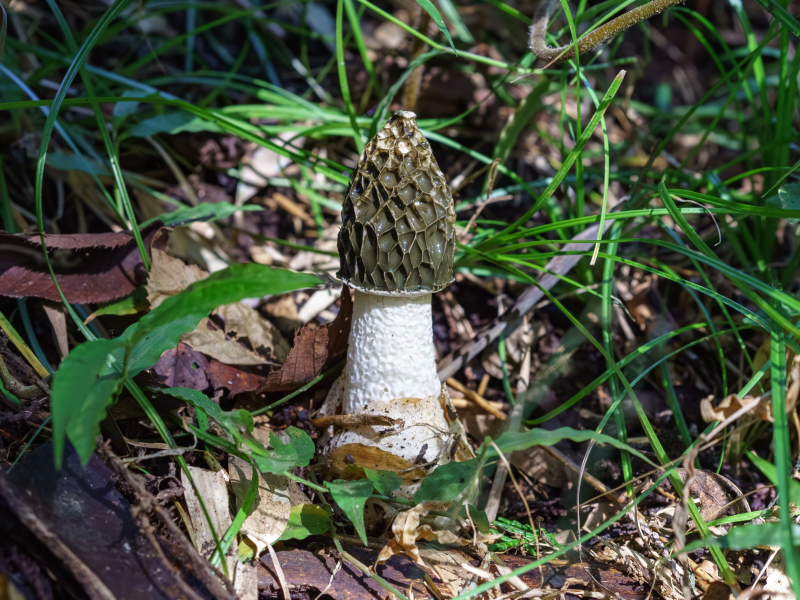
スッポンタケ
2025.08.29
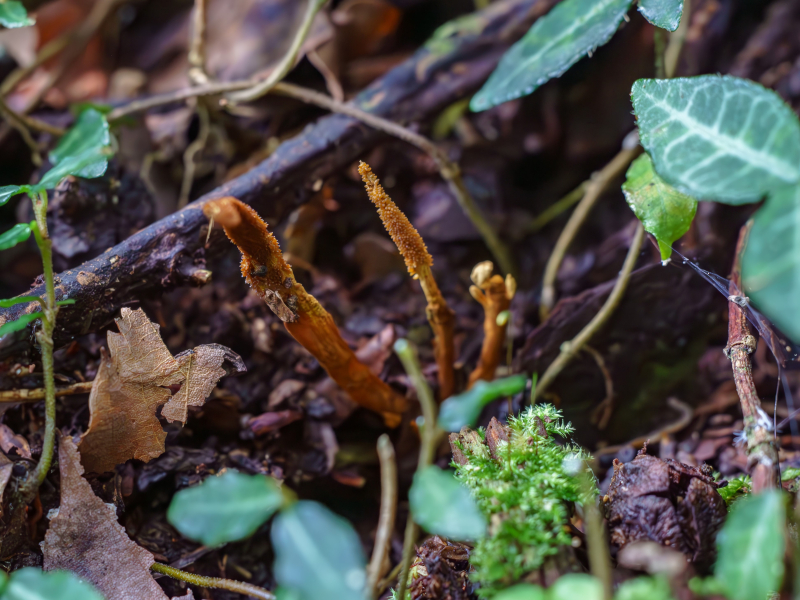
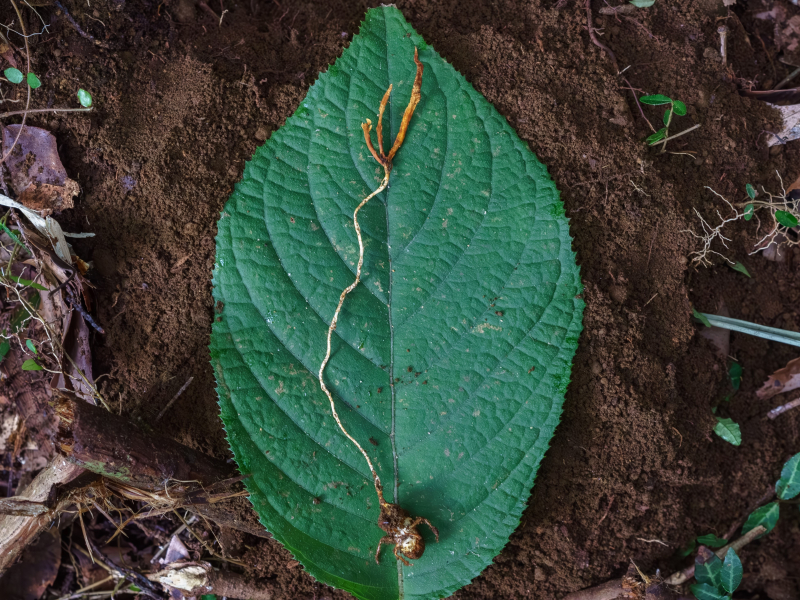
ツブノセミタケ
ツブノセミタケが発生していました。セミの幼虫に寄生する菌類で、いわゆる冬虫夏草と呼ばれる仲間です。北海道から西表島まで広い範囲に分布しています。地上部と地下のセミをつなぐ柄は30cmほどになることもあるそうです。
2025.08.22
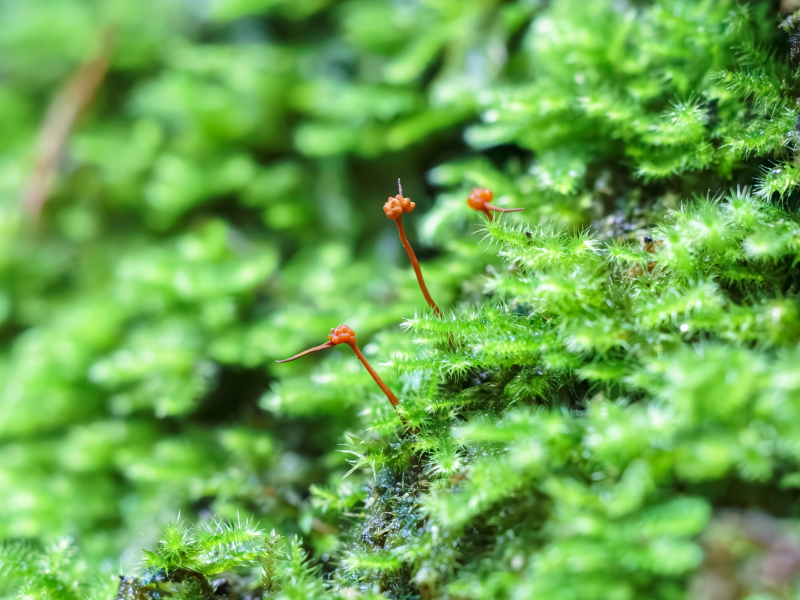
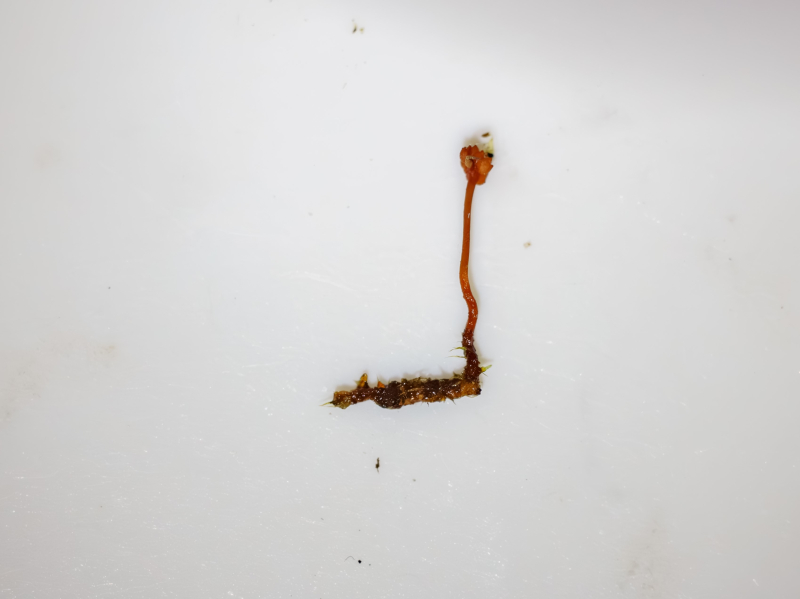
ホソエノアカクビオレタケ
ホソエノアカクビオレタケが発生していました。ハエ類の幼虫に寄生する菌類で、いわゆる冬虫夏草と呼ばれる仲間です。沢沿いの岩の上にあるコケから発生することが多いようです。とても小さく、意識して探さないと見過ごしてしまいます。
2025.08.15
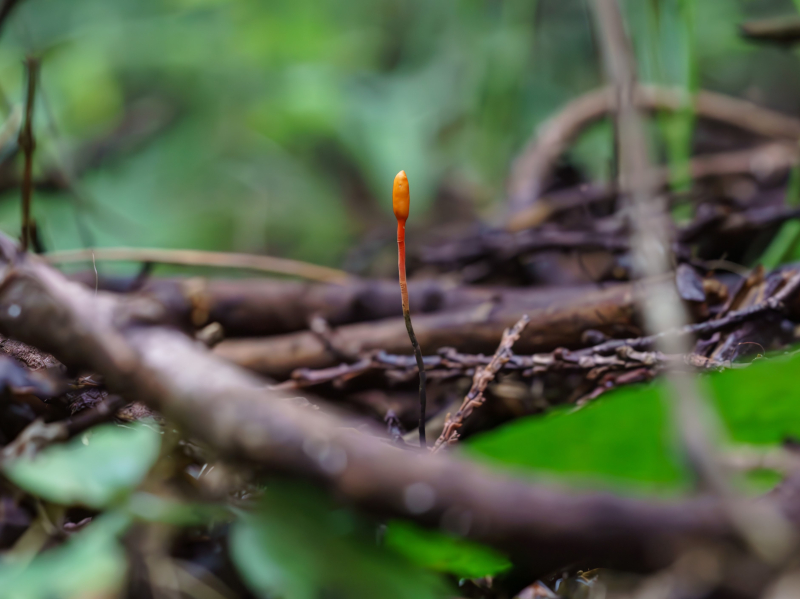
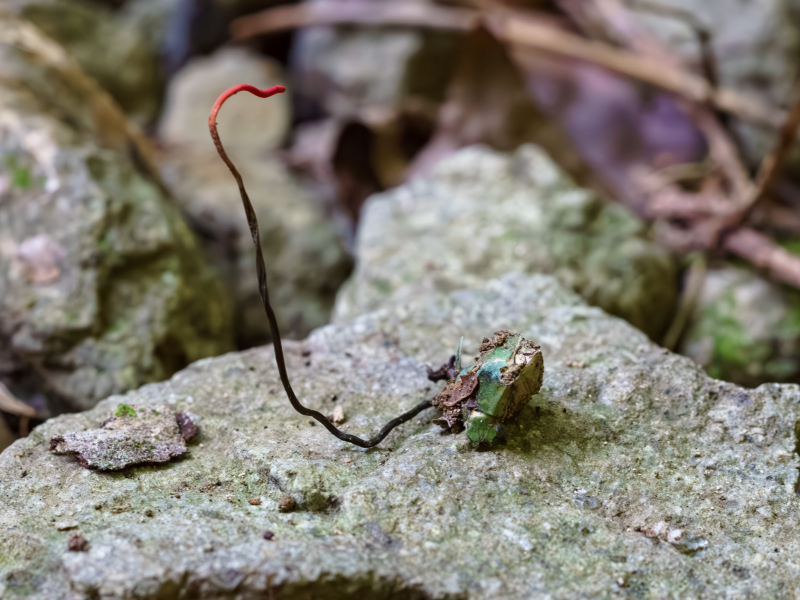
カメムシタケ
カメムシタケが発生していました。カメムシの仲間に寄生する菌類で、いわゆる冬虫夏草と呼ばれる仲間です。地上部は赤く目立つため、比較的見つけやすい種類と言われています。また、カメムシの部分も落ち葉をどける程度で見ることができます。
2025.08.08
ツクツクボウシタケ
ツクツクボウシタケが発生していました。ツクツクボウシの幼虫に寄生する菌類で、いわゆる冬虫夏草と呼ばれる仲間です。掘り起こすと、菌糸に覆われたツクツクボウシの幼虫がでてきます。
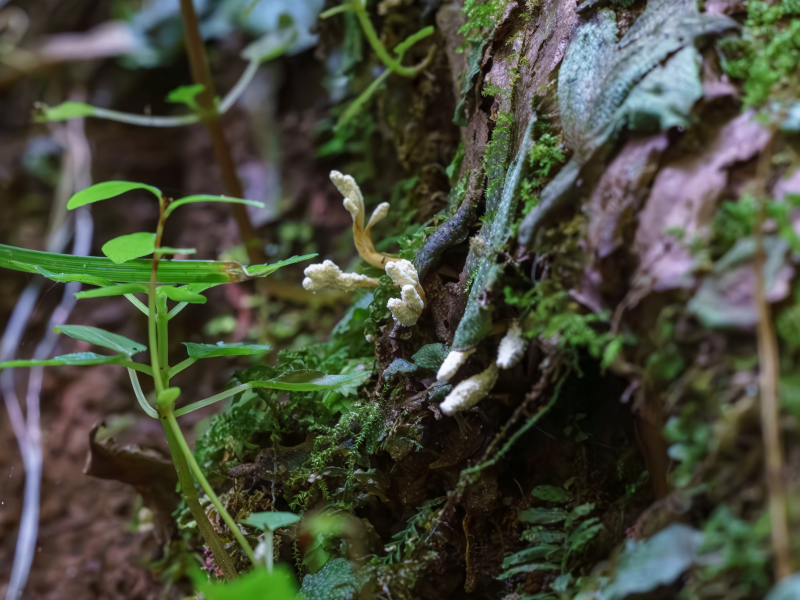
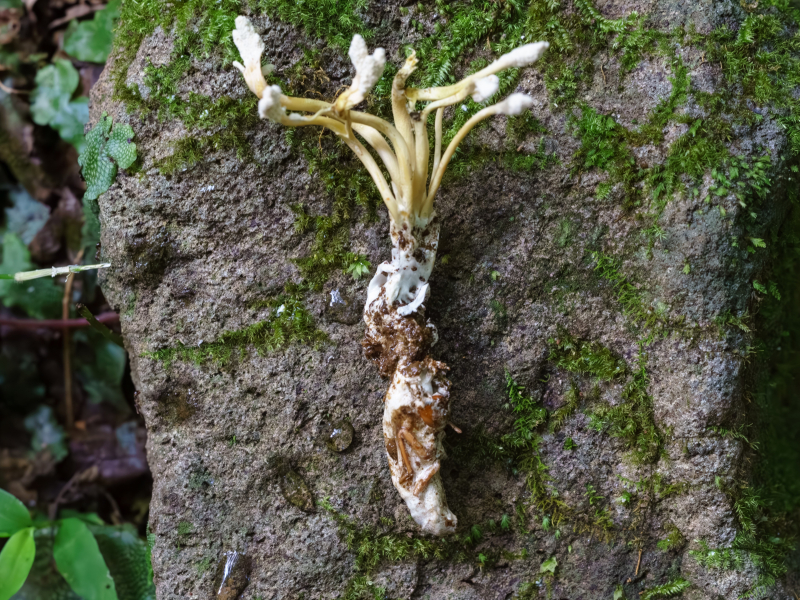
"Tsukutsukuboushi-Take" mushrooms have sprouted. They are a type of fungus that parasitize the larva of a cicada called "Tsukutsukuboushi", and are considered a kind of caterpillar fungus. When dug up, the larva appears covered in hyphae.
2024.03.08
タマキクラゲ
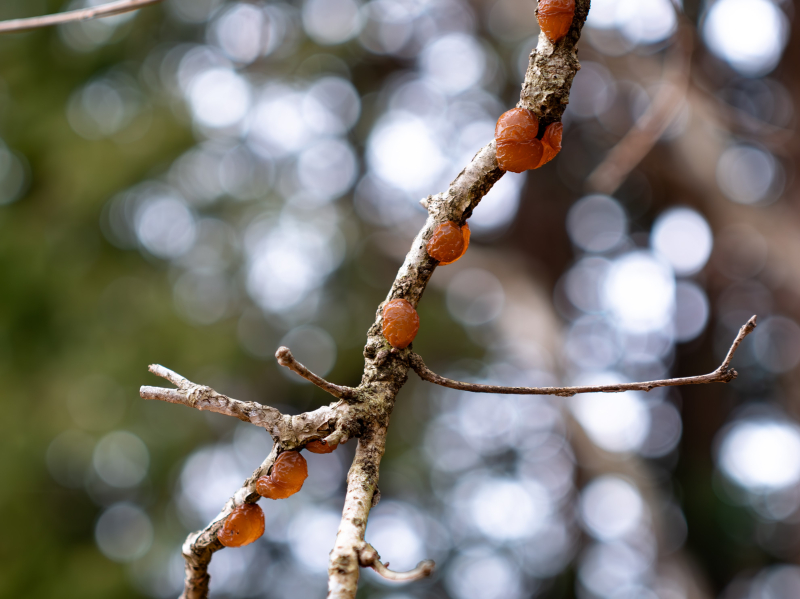
タマキクラゲが発生していました。中華料理でよく使われるキクラゲと同じキクラゲ類に属するゼラチン質のきのこです。不二聖心では春にクヌギの枯れ枝上でよく見られます。
2024.02.27
シイタケ
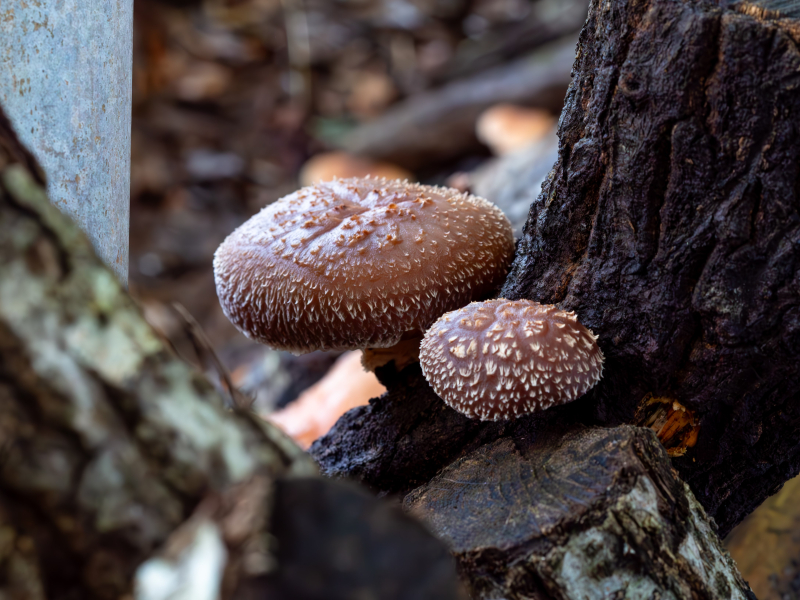
2年前に高校1年生が植菌したホダ木からシイタケが発生していました。数日続いた雨で一気に成長したようです。このような原木栽培では春と秋の年2回収穫することができます。
2024.02.16
カワラタケ
カワラタケが生えていました。枯れ木の上に生える最も一般的なきのこの1つです。傘の表面は褐色や濃青色、黒色など多様性があり、短い毛に覆われています。和名は重なり合って群生する様子を瓦に見立てたものと思われます。
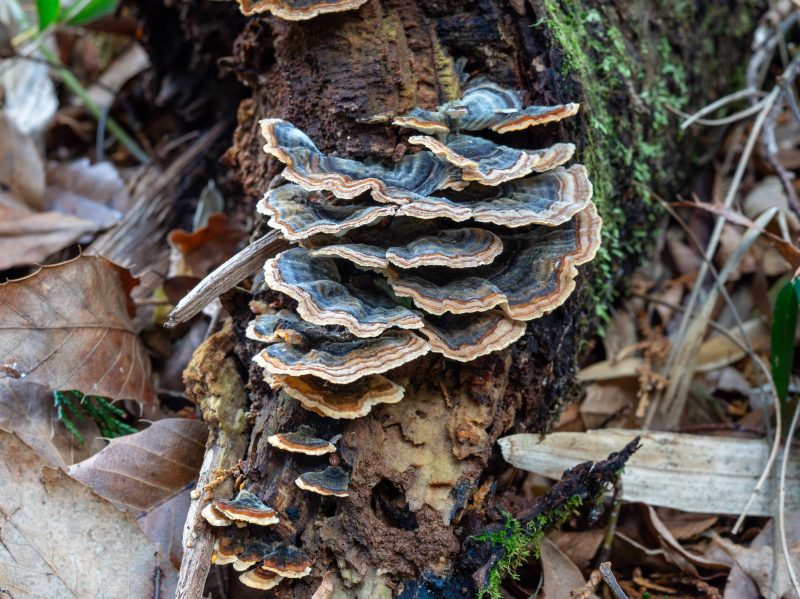
"Kawaratake (カワラタケ)" mushrooms are growing. They are one of the most common mushrooms growing on the dead wood. The color on their caps has varieties like dark brown, dark blue and black. They are also covered with short hair. The name comes from the fact that the way they grow overlapping each other looks like roof tiles.
2024.02.13
ウラベニガサ
ウラベニガサが生えていました。春から秋にかけて広葉樹の枯れ木に生えるきのこです。傘や柄には繊維模様が見られます。和名は、傘の裏側のひだが、初めは白色ですがのちに薄い紅色に変化することに由来するようです。
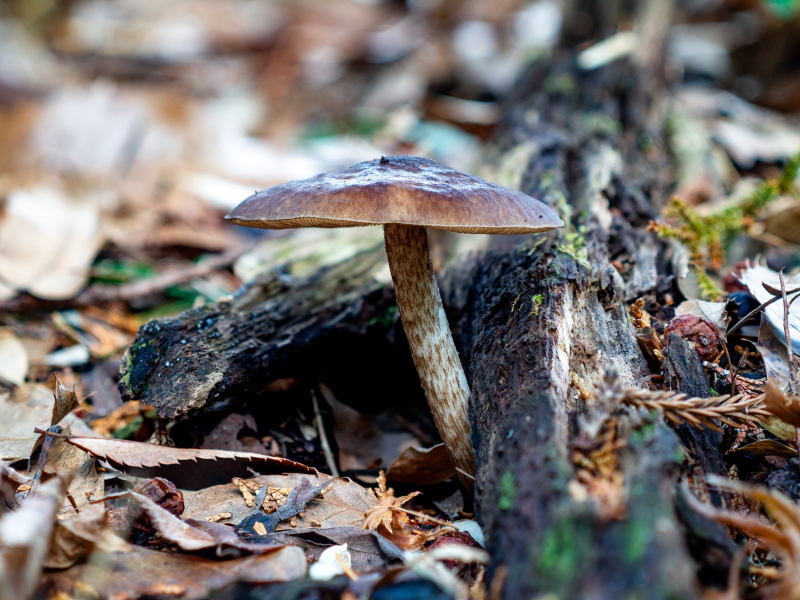
A "Urabeni-Gasa (ウラべニガサ)" mushroom is growing. This mushroom grows on the dead woods of broadleaf trees from the spring to the fall. You can see the fiber patterns on their caps and stalks. The name comes from the fact that the gills on the back of their caps turn to white and later to light pink.
2022.07.12
オオゴムタケ
カエデの倒木上にオオゴムタケが生えていました。名前の通り、ゴム状の弾力のあるキノコです。直径は4cmくらいでした。上面の平らな部分で胞子がつくられます。
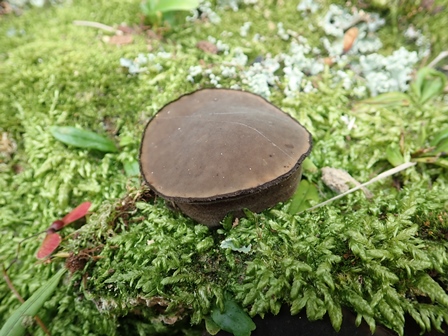
I found a "Oo-Gomutake (オオゴムタケ)" mushroom on a fallen maple tree. As the name suggests, it is as elastic as rubber. Its diameter was about 4cm. Their spores are produced on the flat top surface.