フィールド日記

菌類
2022.01.18
ヒイロタケ
セカンドオークヒルでヒイロタケが発生していました。名前の通り、鮮やかな赤色のキノコです。通年みられるキノコで、広葉樹の枯木上に発生します。白色腐朽菌に分類され、リグニンを分解し、木材を白色に腐らせます。
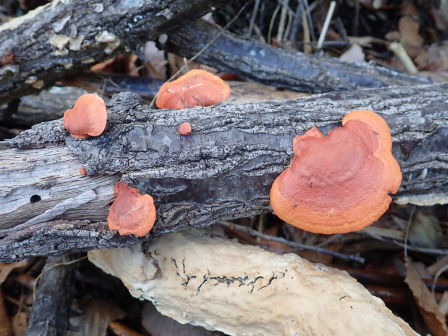
"Hiiro-Take (ヒイロタケ)" mushrooms are growing in the Second Oak Hill. The name means "scarlet mushroom" and it comes from their bright red color. They grow on dead broadleaf trees throughout a year. They are classified as a white-rot fungus and they decompose lignin. The wood rotten by this fungus turns white.
2021.12.21
シイタケ
共生の森で、高校1年生が植菌したシイタケが発生していました。シイタケは春と秋に発生します。ほだ木として用いられている木はクヌギで、里山の代表的な樹種です。
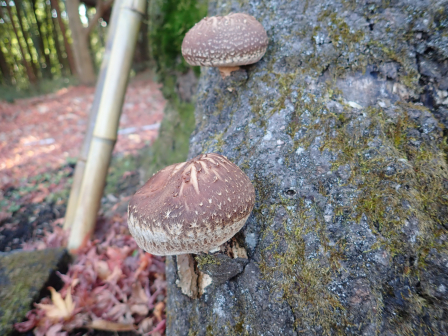
"Shiitake (シイタケ)" mushrooms that 10th grade students planted are growing in the Kyoseinomori-Forest (共生の森). "Shiitake" mushrooms grow in spring and fall. The wood used as bed log is the "Kunugi (クヌギ)" tree, which is a typical tree in "Satoyama (里山)".
2021.03.02
ササのさび病菌
ササの葉の裏面に褐色のつぶつぶを見つけました。ササ類に寄生するさび病菌の一種(Puccinia kusanoi Dietel)です。さび病菌のなかまは異なる宿主の間を行き来したり、5種類の形態や機能の異なる胞子をつくったりなど、複雑な生活史を持っています。
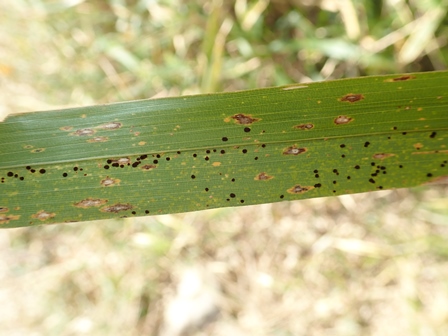
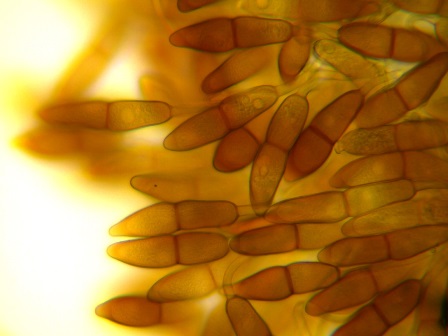
下の写真は褐色のつぶつぶを顕微鏡で観察したものです。これは冬胞子と呼ばれる越冬に適した耐久性のある胞子で、褐色のつぶつぶは冬胞子の集まりであったことがわかります。
I found these brown particles on the back leaves of the Sasa plants. They are a rust fungus (Puccinia kusanoi Dietel) that is parasitic on Sasa Plants. Rust fungi have a complex life cycle that they move back and forth between different host plants and have five different spores.
The second photo is the brown particles enlarged by a microscope. These are winter spores that enable them to stay over the winter. The brown particles are the masses of the spores.
2021.02.09
カワラタケ
キャンプ場の近くでカワラタケを見つけました。枯木などの上に生じる最も一般的なキノコです。和名は多数重なり合って発生する様子を瓦に見立てたことに由来すると思われます。木材に含まれるリグニンと呼ばれる成分を分解し、白く変色させる白色腐朽菌の一種で、生態系の中の分解者として重要な働きをしています。
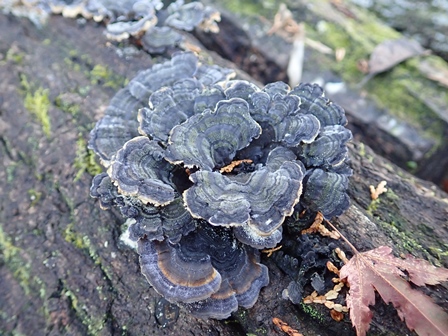
I found this mushroom called "Kawaratake (カワラタケ)" near the campsite. They are one of the most common mushrooms that grow on dead trees. "Kawara (カワラ)" in its name means "roofing tiles" and comes from the way they grow overlapping in clusters. They are white‐rot fungi, which decomposes lignin in wood and turns it white, and they play an important role as a decomposer in the ecosystem.
2021.02.05
スエヒロタケ
共生の森の近くでスエヒロタケを見つけました。表面に綿毛が密生しているのが特徴です。世界中に広く分布しており、学名(Schizophyllum commune)の"commune"もラテン語で「普通の」という意味です。日本でもどこでも見られる種ですが、胞子を吸い込むことでヒトに感染することがあるキノコの1つとされています。
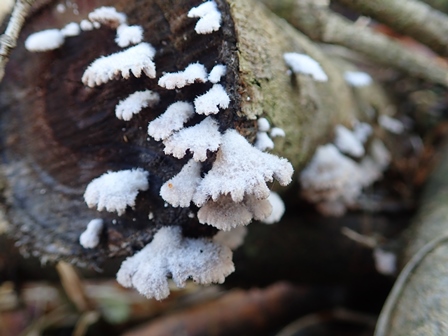
I found this mushroom called "Suehiro-Take (スエヒロタケ)" near the Kyoseinomori-Forest (共生の森). They have fluffy hair on the surface. They are distributed all over the world as the Latin word "commune" in their scientific name (Schizophyllum commune) means "common". You can see them everywhere in Japan as well, but they could infect humans if the spores are inhaled.
2020.10.13
セミノハリセンボン
白いトゲトゲがたくさん出ているセミの死がいを見つけました。セミノハリセンボンという菌類に寄生されたセミの死がいのようです。白いトゲトゲは、先端に分生子と呼ばれる無性的に作られた胞子をつける菌糸です。
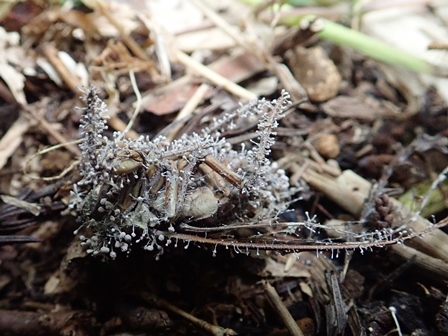
I found a dead cicada with many white spines. It seemed a dead cicada body parasitized by funguses called "Seminoharisenbon (セミノハリセンボン)". The white spines are hyphae that produce spores on the top, which are called conidia reproduced asexually..
2020.07.31
コチャダイゴケ
林道のウッドチップの上にコチャダイゴケが発生していました。一見するとキノコとは思えないユニークな形をしています。茶碗のような形で、中には胞子がつまった粒が入っています。雨滴が当たると中の粒が弾き出されて、胞子を飛ばす仕組みになっています。
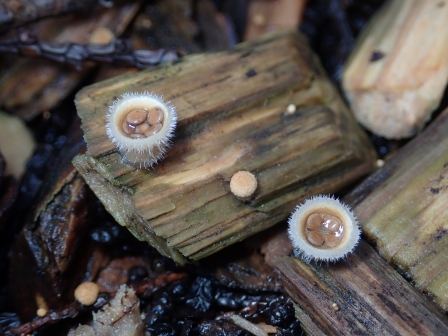
I found these mushrooms called "kochadaigoke(コチャダイゴケ)" on wood chips on a forest road. They have unique shapes as you might not consider them mushrooms at a glance. They look like cups and they have particles filled with spores in the cups. Rain drops flick off the particles and the spores spread outside.
2020.07.24
ノウタケ
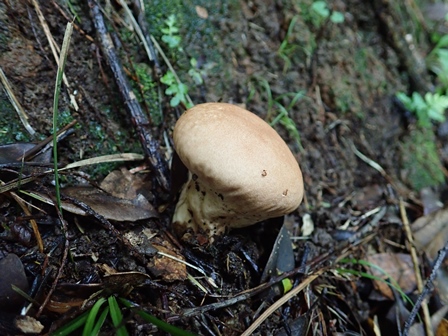
雨が続き、キャンパス内では様々なキノコが見られます。聖心坂の斜面にノウタケが生えていました。和名は、成熟するにつれて表面にしわが寄ってきて、脳のような見た目になることが由来です。中が白い幼菌のうちは食用になるようです。
2020.06.23
アイカワタケ
少し前から講堂横のスダジイの木に、クリーム色のモコモコしたキノコが生えています。手元の図鑑で調べると、アイカワタケのようです。シイ・カシ類に生じ、若いときは柔らかく、その後硬くなります。若いものであれば、火を通して食用になります。
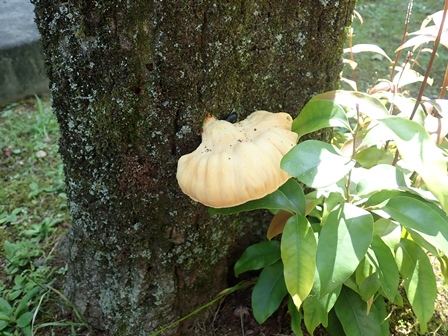
The yellow fluffy mushroom has been growing on the "スダジイ(sudajii)" tree nearby the auditorium from several days. According to a reference book, it seems that it's called "アイカワタケ(aikawatake)". They grow on evergreen oak trees. Young ones are soft and then they become hard. When they are still young you can cook them and they become edible.
2020.03.17
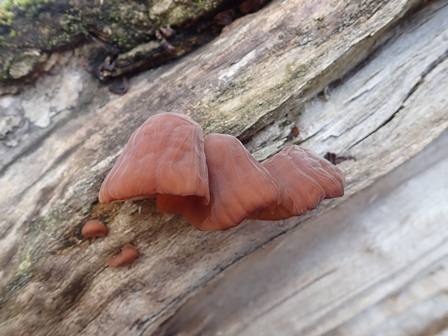
キクラゲ
ススキ野原のカエデの木にキクラゲが出ていました。食材としておなじみのきのこですが、野生では春から秋にかけて広葉樹上に生じるきのこです。スーパー等できくらげとして売られているものには近縁種のアラゲキクラゲも含まれています。キクラゲはアラゲキクラゲに比べ毛が少なく、より透明感があります。