フィールド日記

昆虫
2021.08.06
アブラゼミの幼虫
キャンプ場でアブラゼミの幼虫を見つけました。ちょうど地面から出てきたばかりのようで、木に向かって歩いていました。時間は17時前くらいでした。アブラゼミの幼虫は地中で4~6年ほど過ごしますが、成虫の寿命は数週間といわれています。
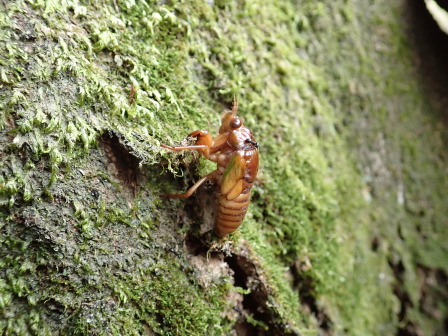
I found a larva of a cicada called "Abura-Zemi (アブラゼミ)" in the campsite. It seems that it just came out of the ground and was walking toward a tree. It was just before 5 p.m. Larvae of this species spend 4 to 6 years under the ground and then they live for only a few weeks above the ground as adults.
2021.07.30
セマダラコガネ
ファーストオークヒルでセマダラコガネを見つけました。広葉樹の葉をはじめ、様々な植物の葉や花で見られます。近年は、ゴルフ場などの芝の害虫として知られているようです。和名は背中のまだら模様に由来しますが、色彩や模様には著しい変異があります。
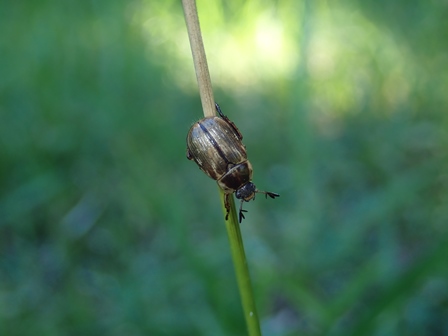
I found a "Semadara-Kogane (セマダラコガネ)" beetle in the First Oak Hill. They eat leaves of broad-leaf trees and many varieties of leaves and flowers. These days, they are known as a pest to lawns in golf courses. The name comes from the pattern on their bodies but the patterns and colors have a lot of diversity.
2021.07.27
シンジュサン
校舎の壁でシンジュサンを見つけました。10cm以上になる大型の蛾です。羽には三日月模様があり、とても美しいです。幼虫は、和名の由来であるシンジュ(ニワウルシ)のほか、多くの樹種の葉を食草とします。
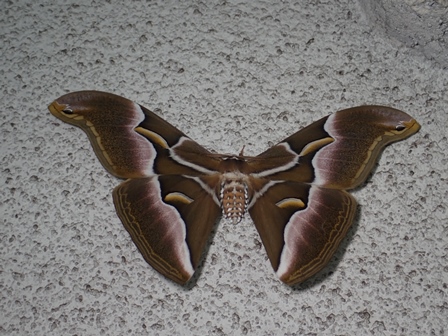
I found "Shinju-San (シンジュサン)" moth on the wall of the school building. They are a large moth that grows up to more than 10 cm. They have crescent patterns on their wings so they are beautiful. Their larvae eat leaves of various trees as well as the leaves of "Shinju (シンジュ)" trees, which is the origin of the name of "Shinju-San (シンジュサン)" moth.
2021.07.23
オバボタル
裏道でオバボタルを見つけました。夜光りながら飛ぶゲンジボタルと同じホタル科です。しかし、オバボタルの成虫はほとんど光ることはないようです。また、幼虫は陸に住んでいて、ミミズなどを食べています。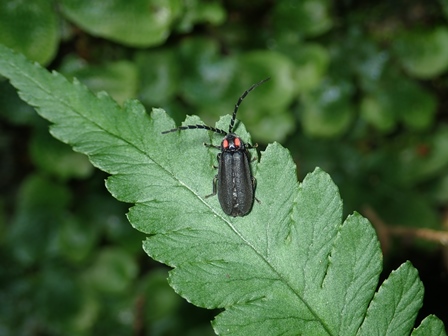
I found a "Oba-Botaru (オバボタル)" firefly on the back road. They are in the same group as "Genji-botaru (ゲンジボタル)" fireflies that fly lighting at night. However, "Oba-Botaru (オバボタル)" fireflies don't light so much. Their larvae are terrestrial and eat earthworms.
2021.07.16
クロツマキシャチホコ
校舎の壁にクロツマキシャチホコがとまっていました。体色や模様が枯れ枝そっくりです。幼虫はクヌギやコナラなどのブナ科の葉を食べます。
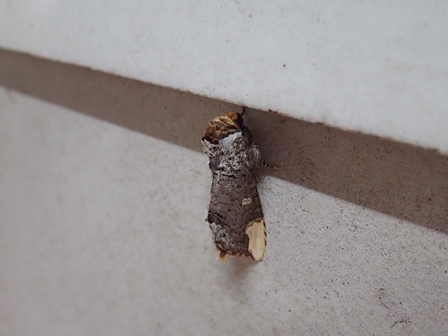
I found "Kuro-Tsumaki-Shachihoko (クロツマキシャチホコ)" on the wall of the school building. Their body colors and patterns look exactly like dead twigs. Their larvae eat oak leaves such as Konara oak trees and Kunugi oak trees.
2021.07.13
ミカドガガンボ
校舎の壁にミカドガガンボが止まっていました。蚊を大きくしたよう見た目ですが、蚊のように人の血を吸うことはありません。幼虫は水辺で生育しています。
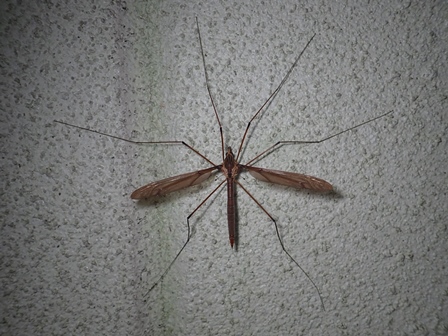
本種は日本最大のガガンボで体長は4cmほどにもなり、長い脚まで含めると、手のひらには収まらないほどの大きさです。
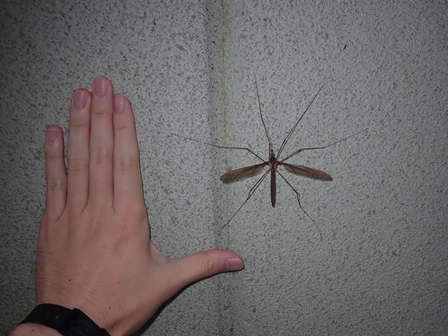
I found "Mikado-Gaganbo (ミカドガガンボ)" on the wall of the school building. They look like large mosquitoes but they don't suck human blood. Their larvae live by the water. This species grow up to 4 cm in body length and it's the largest in Japan. Including their long legs, they don't fit in the palm of your hand.
2021.07.09
ヒカゲチョウ
高校校舎でヒカゲチョウを見つけました。どこからか迷い込んできたようです。雑木林周辺でよく見られる種で、不二聖心でもクヌギの樹液に集まっている様子が観察されています。幼虫の食草はササ類です。
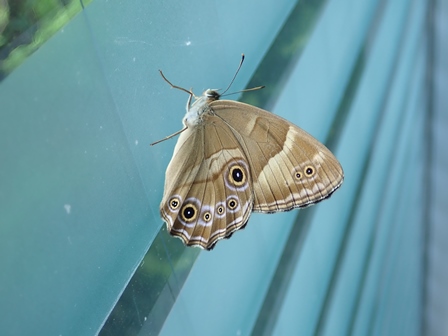
I found a "Hikage-Chou (ヒカゲチョウ)" butterfly in the high school building. It seems to have strayed into the building. They are often seen around thickets. In Fuji-Seishin, they have been observed gathering to tree sap of the Japanese chestnut oaks. Their larvae eat Sasa plants.
2021.07.02
モモスズメ
生徒たちに大きな蛾がいますと呼ばれて行ってみると、図書館の壁にモモスズメがとまっていました。交尾中で、上がメス、下がオスです。写真では前翅の下にあって見えませんが、後翅が桃色であることが和名の由来のようです。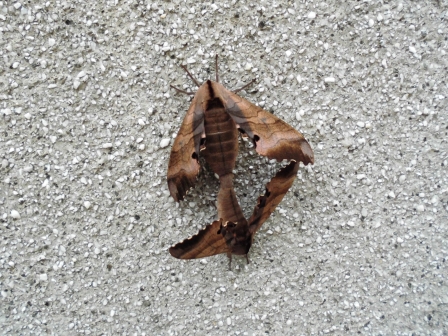
As students said that they had seen big moths in the library, I went there and it turned out that "Momo-suzume (モモスズメ)" moths were on the wall of the library. They were mating and the upper one was a female while the lower was a male. "Momo (モモ)" in the name means "peach" and it comes from the fact that their hind wings are pink like peaches although we can't see them in the photo because they are under fore wings here.
2021.06.11
ミヤマカワトンボ
裏道でミヤマカワトンボを見つけました。名前の通り、丘陵地や山地の渓流などに生息しています。体は金属光沢のある青緑色で、とてもきれいです。また、翅は茶色で、先端付近に濃い褐色の帯があるのが特徴です。
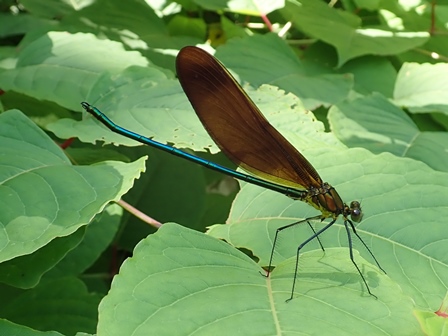
I found a "Miyama-Kawatonbo (ミヤマカワトンボ)" dragonfly on the back road. The name indicates that they live along the streams in mountains and hills. Their body is shiny blue-green and so beautiful. Their brown wings have a dark stripe on the tip.
2021.06.04
アケビコノハ
図書館への渡り廊下の壁でアケビコノハを見つけました。名前は幼虫の食樹がアケビであることに由来します。前翅には葉脈のような模様があり、落ち葉にとてもよく擬態しています。
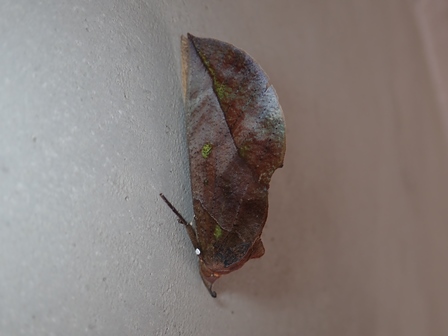
I found a "Akebi-Konoha (アケビコノハ)" moth on the wall of the crossing corridor to the library. Its name comes from the fact that their larvae eat "Akebi (アケビ)" plants. Their fore wings have leaf-vein patterns and they mimic dead leaves very well.