フィールド日記

2026年08月
2026.08.28
アメリカスズメノヒエ
お茶畑の近くでアメリカスズメノヒエが咲いていました。南アメリカ原産のイネ科の多年草です。緑化に用いられ、各地に急速に広がっているようです。
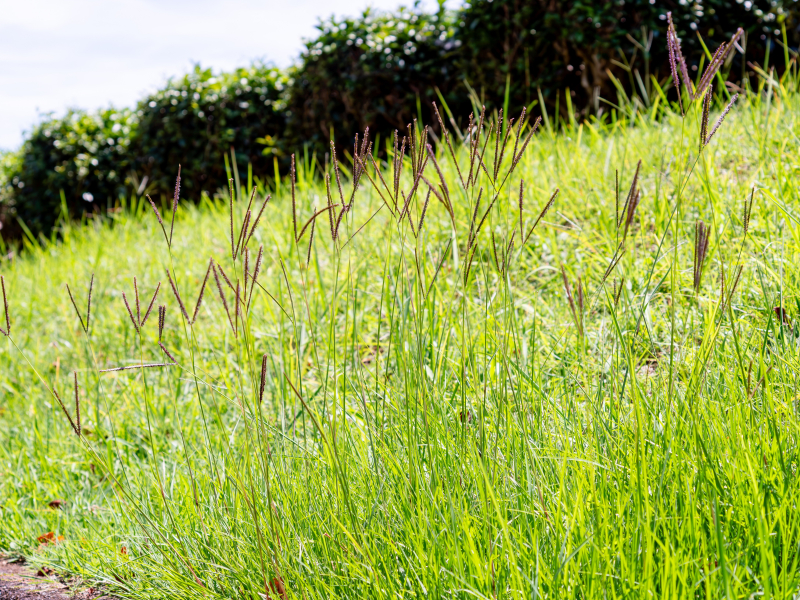
"America-Suzumenohie" plants are in bloom by the tea garden. They are perennial plants in the Poaceae family that are native to South America. They are used in greening and have spread rapidly to many parts of Japan.
2026.08.25
コメヒシバ
校舎前の植え込みにコメヒシバが咲いています。道端などに良く生えるイネ科の一年草です。近縁種のメヒシバとよく似ていますが、全体的に小型で、穂の軸がざらつかないという特徴があります。
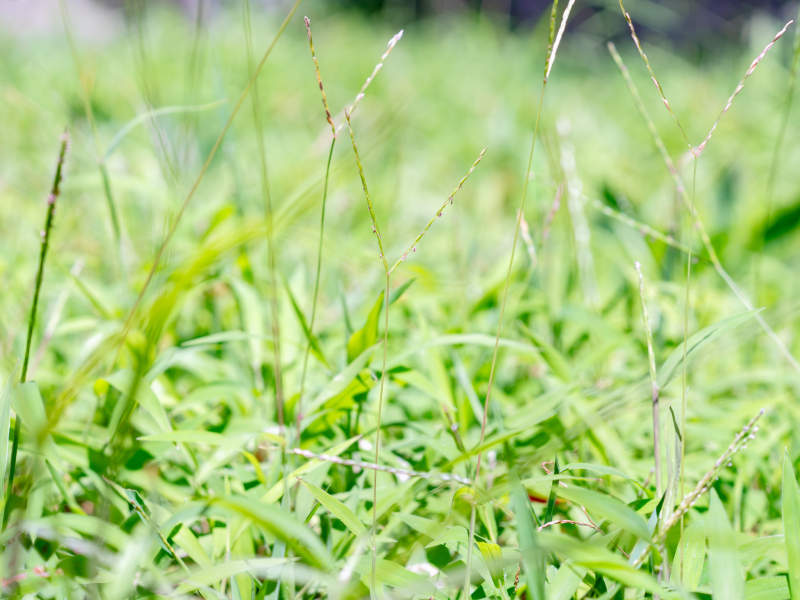
"Ko-Mehishiba" plants are in bloom in the shrubbery in front of the school building. They are annual plants in the Poaceae family that commonly grow along roadsides. They look very similar to their close relatives called "Mehishiba", but they are smaller and can be distinguished by their smooth flower spike axes.
2026.08.21
オニノゲシ
校舎前の植え込みでオニノゲシが咲いています。道端などに見られるキク科の一年草または越年草です。ヨーロッパ原産の帰化植物です。同じくヨーロッパ原産の帰化植物であるノゲシと似ていますが、オニノゲシのほうが葉のトゲが硬く、触ると痛いです。
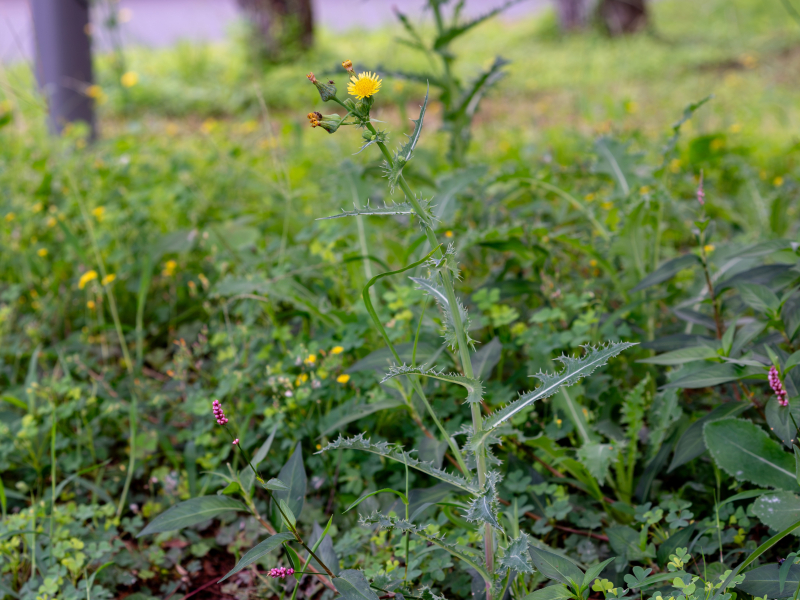
"Oni-Nogeshi" plants are in bloom in the shrubbery in front of the school building. They are annual or winter annual plants in the Asteraceae family that commonly grow along roadsides. They originally came from Europe. There is a close relative "Nogeshi," which also originated in Europe. The spines on the leaves of "Oni-Nogeshi" are harder and sharper than those of "Nogeshi," and they can hurt when touched.
2026.08.18
コニシキソウ
校舎前の植え込みでコニシキソウが咲いています。トウダイグサ科の北アメリカ原産の一年草です。畑や道端など、日本各地で普通に見られます。よく似た在来種のニシキソウは、コニシキソウに押されて少なくなっているようです。
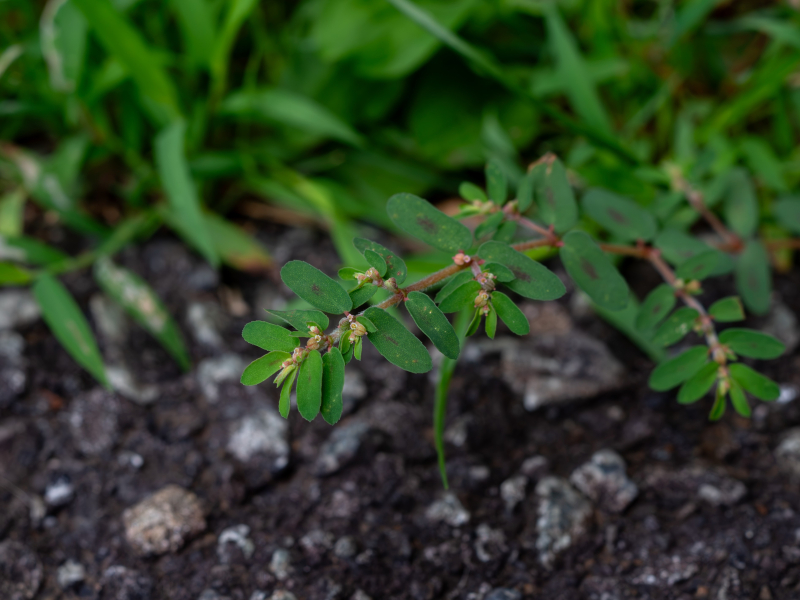
"Ko-Nishikisou" plants are in bloom in the shrubbery in front of the school building. They are annual plants in the Euphorbiaceae family that originally come from North America. Their close relative called "Nishikisou"has been declining in number as it is being displaced by "Ko-Nishikisou".
2026.08.14
コフキサルノコシカケ
裏道でコフキサルノコシカケが発生しています。多年生で一年中みられる大型のキノコです。和名のコフキはココアパウダーのような胞子を大量に飛ばすことに由来します。傘の裏面は白色ですが、傷つけると褐色に変化します。
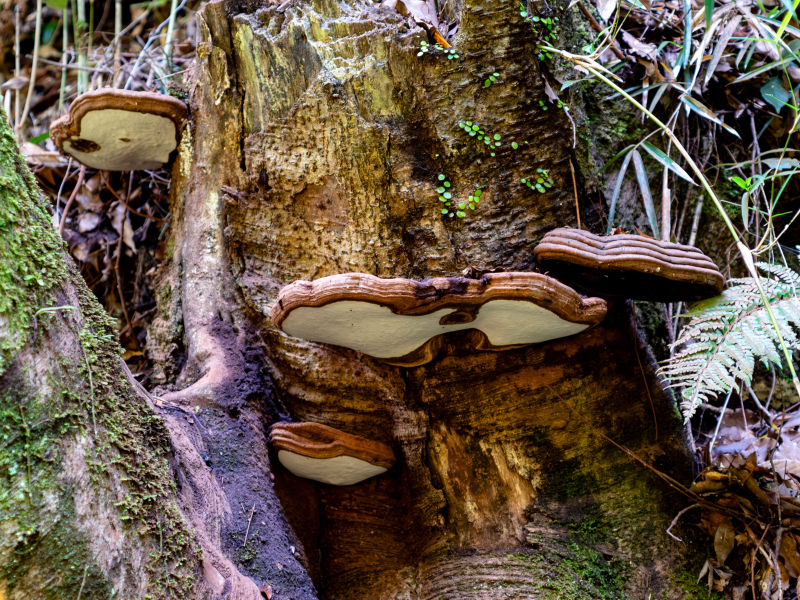
"Kofuki-Sarunokoshikake" mushrooms are growing along the back road. They are large perennial mushrooms that can be seen through the year. The name "Kofuki"comes from the large amount of cacao powder-like spores they release. The back of their cap is white, but it turns dark brown when scratched.
2026.08.11
ヒノキゴケ
ヒノキ林の林床にヒノキゴケが生えていました。谷沿いなどの湿度の高い環境を好むコケ植物です。美しい姿で苔庭などでも利用されるようです。
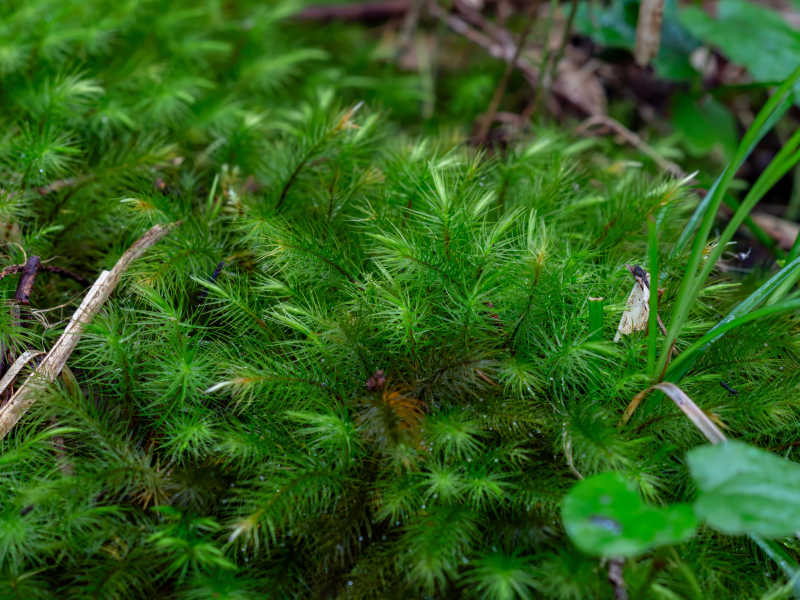
"Hinoki-Goke" mosses are growing in the Japanese cypress woodland. They thrive in moist, shady places especially along valleys and streams. Their beautiful appearance makes them a popular choice for moss gardens.
2026.08.07
ヨウシュヤマゴボウ
裏道でヨウシュヤマゴボウが咲いています。空き地などに見られるヤマゴボウ科の多年草です。食用として山ごぼうという名で売られている植物はキク科のモリアザミで、本種とは全くの別種です。本種は全体に毒があり、根や果実は食べることができません。
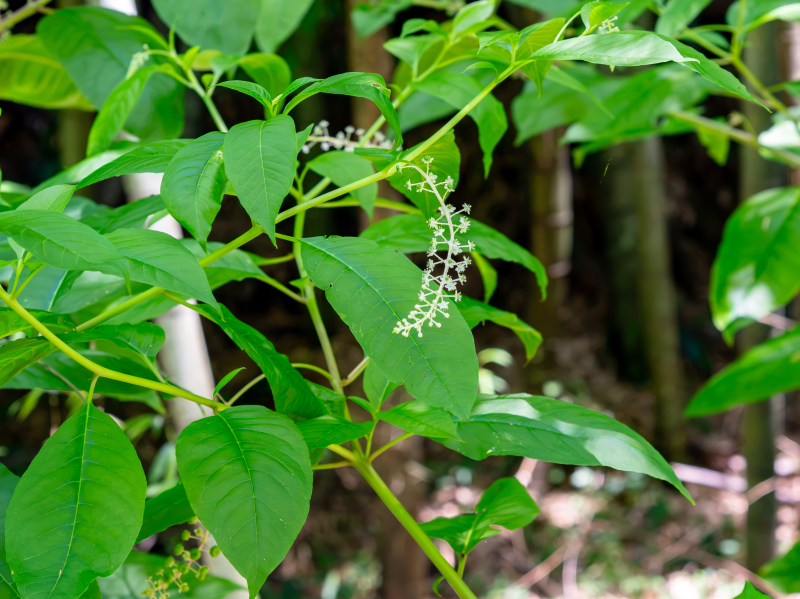
"Youshu-Yamagobou" plants are in bloom along the back road. They are perennial plants in the Phytolaccaceae family that commonly grow in vacant lots and other open areas. Although the name "Yamagobou" is also used for an edible food, that product actually comes from the roots of the "Moriazami" plant, a member of the Asteraceae family, and is completely unrelated to this species. All parts of Youshu-Yamagobou are toxic, so their roots and fruits are not edible.
2026.08.04
メヒシバ
お茶畑でメヒシバが咲いています。畑などに良く生えるイネ科の一年草です。日本全土で見られるほか、世界の暖帯~温帯に広く分布しているといわれています。
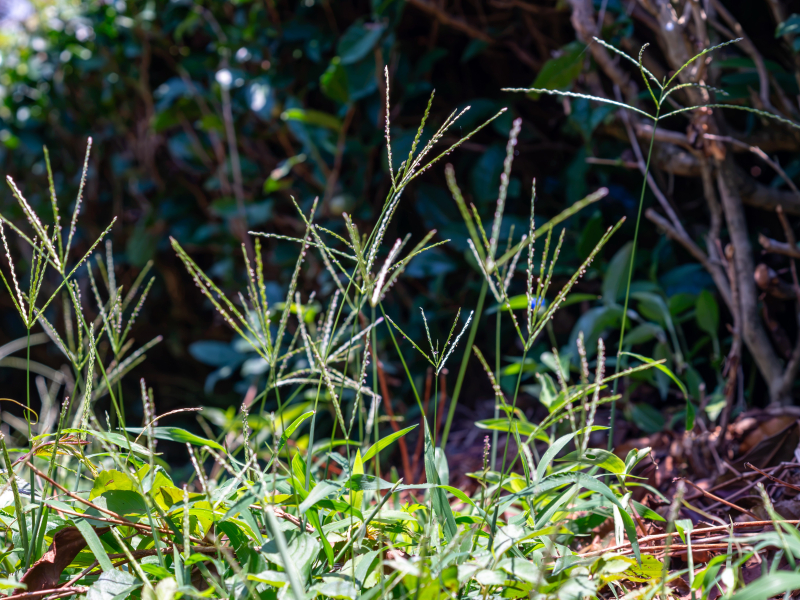
"Mehishiba" plants are in bloom by the tea garden. They are annual plants in the Poaceae family that commonly grow in fields. They are found throughout Japan and also are seen in warm-temperate and temperate regions around the world.
- 1 / 1