フィールド日記

昆虫
2021.05.04
マルボシヒラタハナバエ
クヌギ林でマルボシヒラタハナバエを見つけました。体は丸みを帯びていて、黄色い腹部には黒い紋があります。ヤドリバエの仲間で、成虫は花に集まりますが、幼虫はカメムシに寄生します。
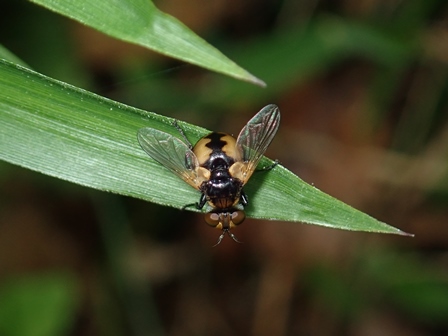
I found a "Maruboshi-Hirata-Hanabae (マルボシヒラタハナバエ)" in the Japanese chestnut oak woodland. Their bodies are roundish and their yellow abdomen has a black pattern. They belong to the tachina fly group. While the adults gather in flowers, the larvae parasitize stink bugs.
2021.04.23
クロボシツツハムシ
共生の森でクロボシツツハムを見つけました。コナラなどの広葉樹の葉を食べるハムシの仲間です。オレンジ色の体に黒い斑点があり、一見するとテントウムシのようです。多くの昆虫が、毒をもつテントウムシに擬態することで天敵から身を守っており、クロボシツツハムシもその1種と考えられます。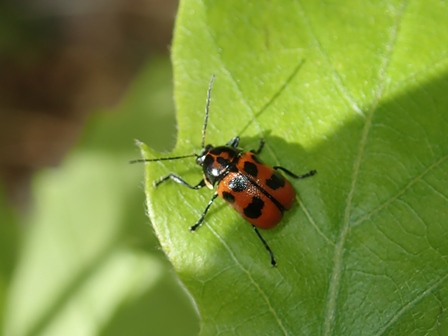
I found a "Kuroboshi-Tsutsuhamushi (クロボシツツハムシ)" in the Kyoseinomori-Forest (共生の森). They are leaf beetles that eat broad leaf trees such as Konara oak trees. They have black spots on their bright orange-base body so they look like a ladybug. Many insects mimic toxic ladybugs to protect themselves from their predators. "Kuroboshi-Tsutsuhamushi (クロボシツツハムシ)" is one of those insects.
2021.04.16
フトカドエンマコガネ
共生の森でフトカドエンマコガネを見つけました。食糞性コガネムシの一種です。今回は、古いシイタケのホダ木についていました。動物の糞だけでなく、腐ったキノコに集まることもあるようです。
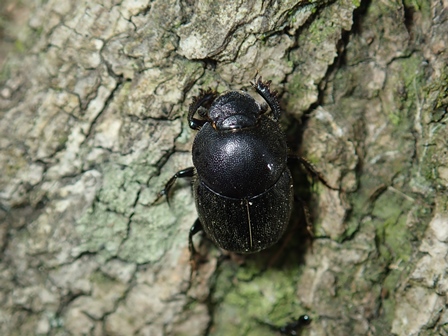
I found "Futokado-Enmakogane (フトカドエンマコガネ)" in the Kyoseinomori-Forest (共生の森). They are a dung beetle. I found one on an old shiitake mushroom log. The beetles seem to gather not only on excrement but also on rotten mushrooms.
2021.04.13
ガロアノミゾウムシ
共生の森のコナラの葉の上で、ガロアノミゾウムシを見つけました。ノミゾウムシという名前の通り、2.5mmほどの小さいからだと、象の鼻のような長い口吻をもっています。幼虫は葉の内側に潜って生活しています(ガロアノミゾウムシの幼虫について記事はこちら)。
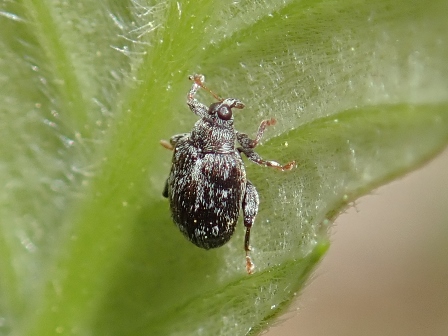
I found a weevil called "Garoa-Nomi-Zoumushi (ガロアノミゾウム)" on Konara oak leaf in the Kyoseinomori-Forest (共生の森). "Nomi (ノミ)" and "Zou (ゾウ)" mean "flea" and "elephant" respectively. They have a small body of about 2.5 mm in size and a long proboscis looking like elephant's nose. Their larvae live inside the leaves (Click here to read the article about the larvae of "Garoa-Nomi-Zoumushi").
2021.04.06
ビロウドツリアブ
共生の森でたくさんのビロウドツリアブを見ることができます。春に見られるアブのなかまで、長い口吻で花の蜜を吸っています。ブーンという羽音を立てながら、羽を高速で動かし、ホバリングすることができます。まるで何かに吊るされているように、空中で静止している様子と、体にビロードのように毛が密に生えていることが和名の由来のようです。
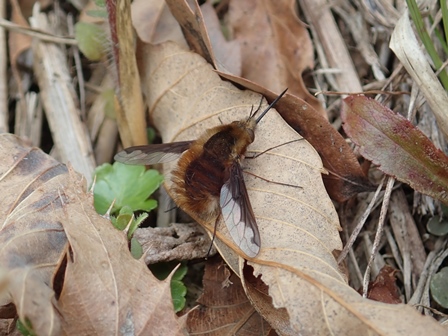
I found many bee flies called "Biroudo-tsuriabu (ビロウドツリアブ)" in the Kyoseinomori-Forest (共生の森). They appear in spring and have a long proboscis to suck nectar. They move their wings quickly to hover making a bee-like noise. The name comes from their movement in the air and their hairy appearance like a velvet.
2021.03.30
イタドリハムシ
駐車場のそばでイタドリハムシを見つけました。名前の通り、主にイタドリを食草とするハムシです。黒地にオレンジ色の斑紋がよく目立ち、一見するとテントウムシのようにも見えます。毒をもつテントウムシに擬態し、身を守っていると考えられます。
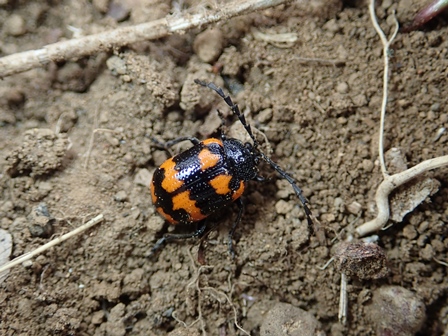
I found a leaf beetle called "Itadori-hamushi (イタドリハムシ)" near the parking area. "Itadori (イタドリ)" in its name are some kinds of plants and they literally eat the plants. They have bright orange spots on the black-base body so they look like a ladybug. They probably mimic toxic ladybugs to protect themselves from their predators.
2021.03.16
ミノオキイロヒラタヒメバチ
樫の木の葉の上で越冬しているミノオキイロヒラタヒメバチを見つけました。足を水平に開き、ぴったりと葉にくっついていました。この葉にだけ4匹が集まっていたので、集団で越冬する性質があるようです。ヒメバチは他の昆虫に寄生する寄生蜂として知られています。
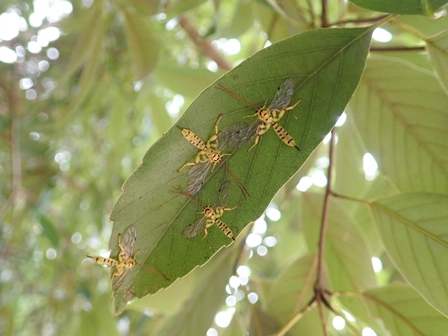
I found a group of ichneumon wasps which is staying over the winter on a leaf of oak tree. They are called "Minoo-Kiiro-Hirata-Himebachi (ミノオキイロヒラタヒメバチ)". They horizontally stretched their legs and clung to the leaf. As they are seen only on the leaf, they seem to have a habit to stay over the winter as a group. Ichneumon wasps are known as parasitoid wasps that parasitize other insects.
2020.12.25
ウラギンシジミ
樫の木の葉の裏面にウラギンシジミが止まっていました。名前の通り、翅の裏面が銀色です。成虫は常緑樹の葉の裏面で越冬することが知られており、この個体も越冬すると思われます。
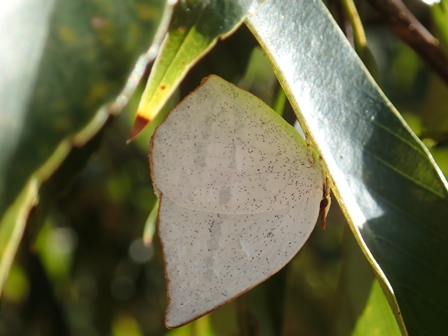
I found a "Uraginshijimi (ウラギンシジミ)" butterfly on the back of a oak leaf. As the name "Uragin" suggests, the back of their wings are actually silver. It is known that they overwinter as an adult on the back of a leaf of evergreen trees, so this one I just saw will probably overwinter there.
2020.12.18
スギドクガ
ヒノキ林で、鮮やかな緑の毛虫を見つけました。スギドクガの幼虫です。幼虫はスギやヒノキなどを食樹としています。名前にドクガとついていますが、毒はもっていないと言われています。
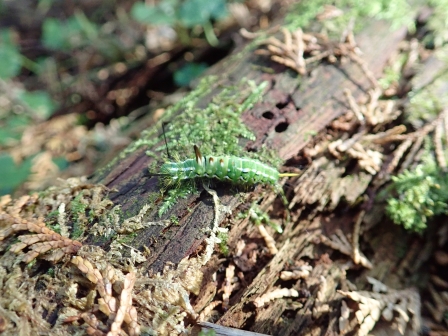
I found a bright green hairy caterpillar in the Japanese cypress woodland. It is a larva of "Sugidokuga (スギドクガ)" moth. The larvae eat leaves of cedar trees and cypress trees. They are named "Dokuga (ドクガ)", which means "poisonous moth", but they don't actually have poison.
2020.12.15
ニホントビナナフシ(モズのはやにえ)
先週の生物基礎のフィールドワーク中に、ススキ野原でクヌギの枝に刺さったニホントビナナフシを見つけました。モズのはやにえと考えられます。モズのはやにえとは、野鳥のモズが捕らえた獲物をすぐに食べず、木の枝などに刺しておいたものです。はやにえのはたらきは諸説ありますが、最近の研究によると、繁殖期前にはやにえを食べることで、オスの歌の質が高まり、より強くメスを引き付けることがわかったそうです。
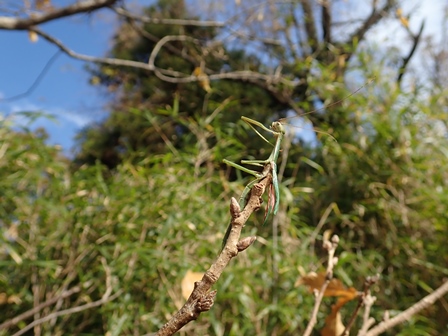
We found a stick bug called "Nihon Tobinanafushi(ニホントビナナフシ)", which was impaled on a twig of a SawTooth oak tree during our fieldwork in Basic Biology class last week. It seemed a prey impaled by a Bull-headed Shrike bird, called "Mozunohayanie (モズのはやにえ)" in Japanese. Bull-headed Shrike birds have a custom that they catch a prey and impale it on a twig for their later consumption. There are some hypotheses why they do so. According to a recent study, they eat impaled preys before their breeding period so that they can sing better and attract females more.