フィールド日記

2021.02.12
キジノオシダ
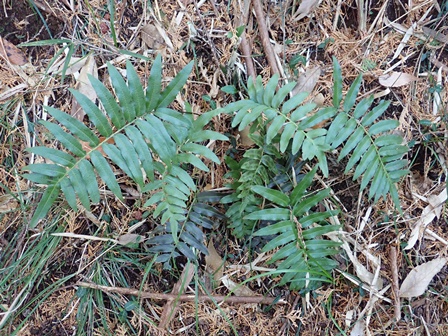
ヒノキ林の林床でキジノオシダを見つけました。暖地に生えるシダ植物です。先日紹介した近縁のオオキジノオととても良く似ています(オオキジノオの記事はこちら)。
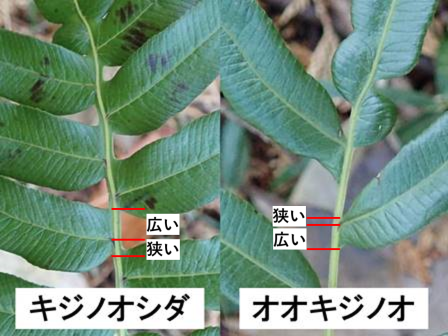
葉の先端付近の羽片の軸にくっついている部分を見ることで両者を見分けることができます。下の写真のようにキジノオシダは羽片の上側が広く軸につくのに対し、オオキジノオは羽片の下側が広く軸につきます。
I found a fern called "Kijinoo-Shida (キジノオシダ)" on the Japanese cypress woodland floor. They are a fern plant that grows in warm climate. They are similar to a close-related fern called "Oo-Kijinoo (オオキジノオ)", which I posted the other day (Click here to read the article).
You can distinguish between the two by looking at where the pinna connects to the axis. The upper part of the pinna of "Kijinoo-Shida (キジノオシダ)" is wider at this point. In the case of "Oo-Kijinoo (オオキジノオ)" it is the lower part of the pinna that is wider where it connects to the axis.
2021.02.09
カワラタケ
キャンプ場の近くでカワラタケを見つけました。枯木などの上に生じる最も一般的なキノコです。和名は多数重なり合って発生する様子を瓦に見立てたことに由来すると思われます。木材に含まれるリグニンと呼ばれる成分を分解し、白く変色させる白色腐朽菌の一種で、生態系の中の分解者として重要な働きをしています。
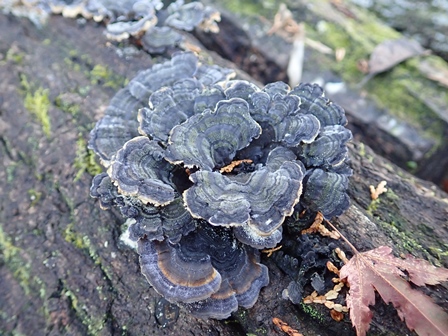
I found this mushroom called "Kawaratake (カワラタケ)" near the campsite. They are one of the most common mushrooms that grow on dead trees. "Kawara (カワラ)" in its name means "roofing tiles" and comes from the way they grow overlapping in clusters. They are white‐rot fungi, which decomposes lignin in wood and turns it white, and they play an important role as a decomposer in the ecosystem.
2021.02.05
スエヒロタケ
共生の森の近くでスエヒロタケを見つけました。表面に綿毛が密生しているのが特徴です。世界中に広く分布しており、学名(Schizophyllum commune)の"commune"もラテン語で「普通の」という意味です。日本でもどこでも見られる種ですが、胞子を吸い込むことでヒトに感染することがあるキノコの1つとされています。
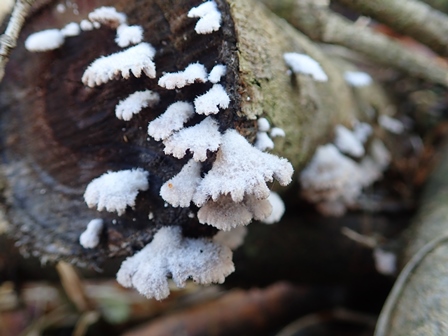
I found this mushroom called "Suehiro-Take (スエヒロタケ)" near the Kyoseinomori-Forest (共生の森). They have fluffy hair on the surface. They are distributed all over the world as the Latin word "commune" in their scientific name (Schizophyllum commune) means "common". You can see them everywhere in Japan as well, but they could infect humans if the spores are inhaled.
2021.02.02
フルノコゴケ
キャンプ場の近くの木で、フルノコゴケを見つけました。黒い球のようなものが朔(さく、胞子をつくる器官)で、花のように見えるものは、朔が開いたものです。和名は古鋸苔(ふるのこごけ)で、湿って開いた葉のようすが古いノコギリの歯のように見えることに由来します。
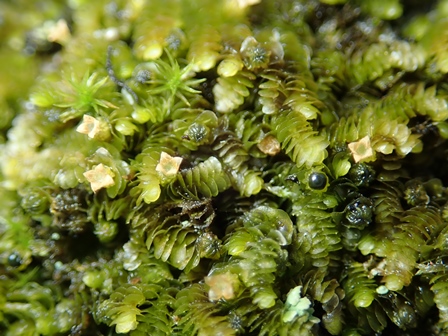
I found this moss called "Furunoko-Goke (フルノコゴケ)" on a tree near the campsite. The black balls are capsules, which produce spores, and the flower-looking things are open capsules. The name means "old saw moss" and it comes from the fact that the wet open leaves look like saw teeth.
2021.01.29
サヤゴケ
共生の森の近くで、サヤゴケを見つけました。乾燥や大気汚染に強く、都市部でも見つけることができるコケです。和名は、朔(さく、胞子をつくる器官)の柄が葉に包まれていることに由来します。
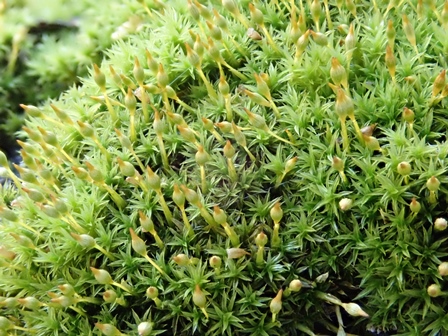
I found a moss called "Saya-goke (サヤゴケ)" near the Kyoseinomori-Forest (共生の森). They are resistent to dryness and air pollution, so you can find them in urban areas. "Saya (サヤ)" in its name means "sheath" and comes from the fact that the stalks in their capsules, which produce spores, are wrapped by leaves.
2021.01.26
オオキジノオ
ヒノキ林の林床にオオキジノオが生えています。暖地の林内に生えるシダ植物で、北限に近い東京や神奈川では絶滅危惧種に指定されています。和名は葉の形がキジの尾羽に似ていることに由来するようです。
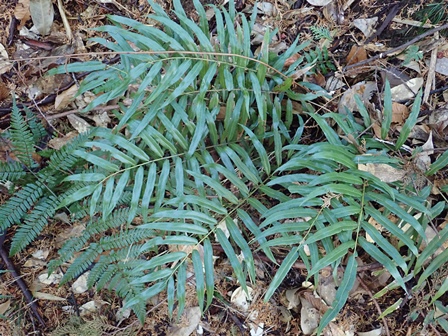
近縁種のキジノオシダによく似ていますが、羽片に柄があることで区別することができます。
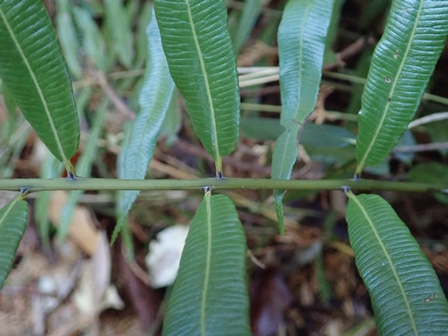
I found a fern called "Oo-Kijinoo (オオキジノオ)" on the Japanese cypress woodland floor. They are a fern plant that grows in warm climate. They are designated as endangered species in the areas near the northern limit like Kanagawa and Tokyo. "Kijinoo (キジノオ)" in its name means "feathers pheasant's tail" and it comes from the shape of their leaves.
They are similar to their close relative species called "Kijinoo-Shida (キジノオシダ)", but you can identify them by the fact that the pinna of "Oo-Kijinoo (オオキジノオ)" has a stalk.
2021.01.22
コシダ
聖心坂の近くの森の中でコシダを見つけました。葉の軸の先端に芽があり、二叉に分枝を繰り返しながら成長するという特徴があります。硬く、つるつるした葉の軸は、編みかごの材料として使われていたようです。
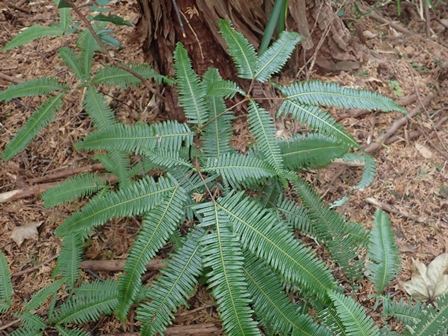
I found a fern called "Koshida (コシダ)" in a forest near the "Seishin Zaka(聖心坂)". They have a shoot at the end of their leaf axis and grow dichotomous branches repeatedly. The leaf axes are smooth and tough, so people used them to make wicker baskets.
2021.01.19
マツゲゴケ
共生の森でマツゲゴケを見つけました。名前にコケとついていますが、コケ植物ではなく、菌類と藻類の共生体である地衣類の仲間です。日本の低地の代表的な種ですが、都市部ではあまり見られません。
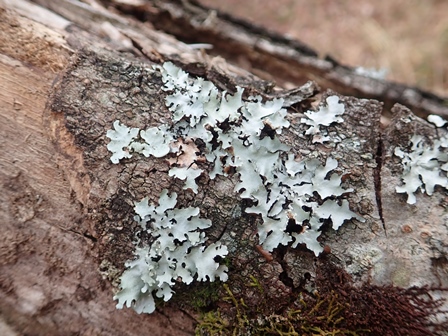
和名は地衣体の縁に見られるシリアと呼ばれるマツゲ状の構造が由来です。
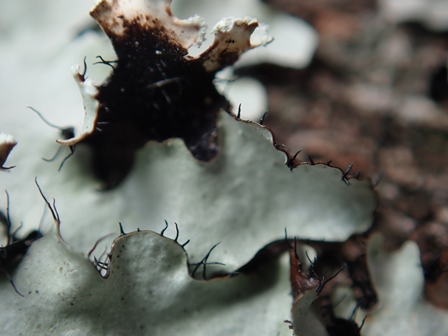
I found "Matsuge-goke (マツゲゴケ)" on a tree in the Kyoseinomori-Forest (共生の森). The name has the word "koke (コケ)", which means "moss", but they are not a moss plant. They are lichen, which is a symbiont that consist of fungi and algae. This species is common in Japan but you hardly see them in urban areas. "Matsuge (マツゲ)" in its name means "eyelash" and it comes from the eyelash-shaped features that they have on the edge of their body.
2021.01.15
クリハラン
裏道の小川のそばでクリハランを見つけました。名前の通り、クリの葉に似た葉をもつシダ植物です。
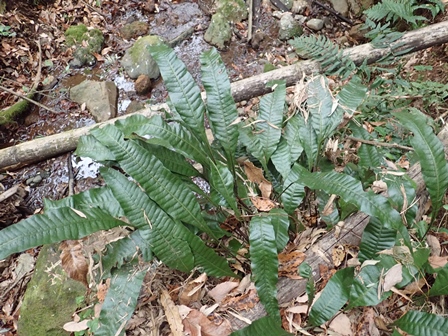
切れ込みのない葉はシダらしくありませんが、裏面には円形の胞子のう群がついており、シダ植物であることがわかります。
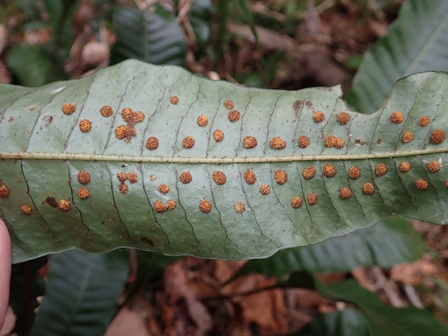
I found this fern called "Kuriharan (クリハラン)" by a stream on the back road. "Kuri (クリ)" in its name means "chestnuts". As the name suggests, their leaves resemble chestnuts' leaves. You may think the leaves without laciniae don't look like fern plants, but you will understand that the plant is fern by seeing the round-shaped sori on the back of the leaves.
2021.01.12
オオバノイノモトソウ
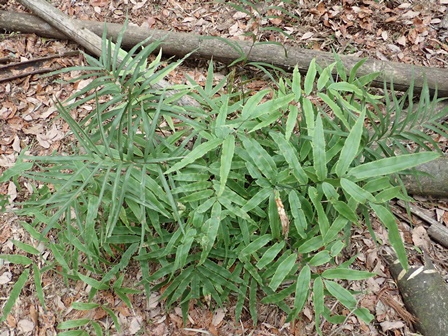
裏道でオオバノイノモトソウを見つけました。近縁種のイノモトソウに似ていますが、より大型です。葉は胞子をつける胞子葉と胞子をつけない栄養葉の2種類があり、胞子葉の羽片は栄養葉の羽片に比べ、幅が狭くなっています。
胞子のう群は、葉のふちに沿ってついています。
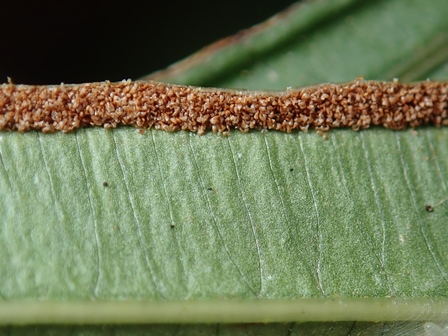
I found this fern called "Oobano-inomotosou (オオバノイノモトソウ)" on the back road. They are similar to their close relative species called "Inomotosou (イノモトソウ)", but are larger. They have two types of leaves. One is a fertile leaf, which has spores. The other is a sterile leaf, which doesn't have spores. Their fertile leaves are narrower than their sterile leaves. You can see their sori are along the edge of the leaves.