フィールド日記

昆虫
2022.11.15
ガマズミミケフシ
ススキ野原の入り口でガマズミミケフシが見られます。ガマズミミケフシとは、タマバエの一種がガマズミの実に寄生することで生じる虫こぶのことです。写真の左の赤い果実が正常なガマズミの果実ですが、タマバエが卵を産むことで組織が変化し、丸く毛におおわれた虫こぶになります。
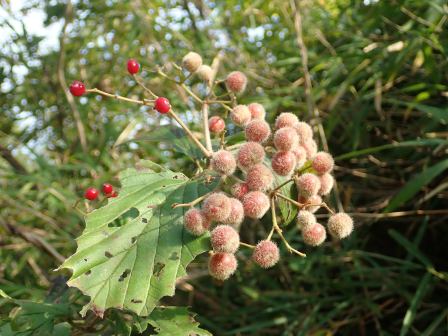
I found "Gamazumi-Mikefushi (ガマズミミケフシ)" at the entrance of the Japanese pampas grass field. "Gamazumi-Mikefusi" is a gall produced by a gall midge that is parasitizing in the fruit of "Gamazumi (ガマズミ)" trees. The normal "Gamazumi" fruit is red as you can see on the left side of the photo. However, after a gall midge lays its eggs on the fruit, the tissue changes and the fruit turns round and hairy.
2022.11.11
イチモンジセセリ
イチモンジセセリがツワブキの花を訪れていました。名前の通り、翅の4つの白い斑紋が一列に並びます。個体数も多い普通種で、花を訪れている姿をよく見ます。
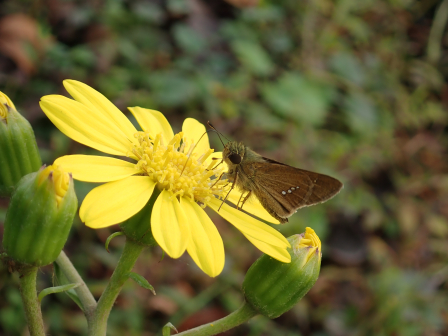
I found a "Ichimonji-Seseri (イチモンジセセリ)" butterfly visiting a "Tsuwabuki (ツワブキ)" flower. As the name suggests, four white spots on its wings are in line. They are a common species with large population, so you can often see them visiting flowers.
2022.10.25
ホシアワフキ
第二オークヒルのススキの上で、ホシアワフキを見つけました。幼虫、成虫ともにススキなどイネ科の植物の汁を吸うようです。アワフキムシの仲間は、幼虫のときに自ら作った泡の中に隠れています。
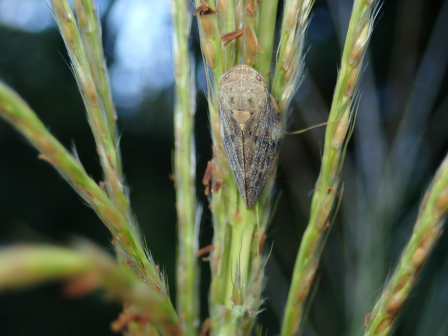
I found a froghopper called "Hoshi-Awafuki (ホシアワフキ)" on the Japanese pampas grass in the Second Oak Hill. Both their larvae and adults suck the sap of grass family plants such as the Japanese pampas grass. Froghopper larvae produce bubbles and hide inside them.
2022.10.04
カワラスズ
第1オークヒルの土手でカワラスズを見つけました。マダラスズに似ていますが、翅の付け根や小あごひげと呼ばれる部分が白いことで見分けることができます。美しい声で鳴く虫としても知られています。
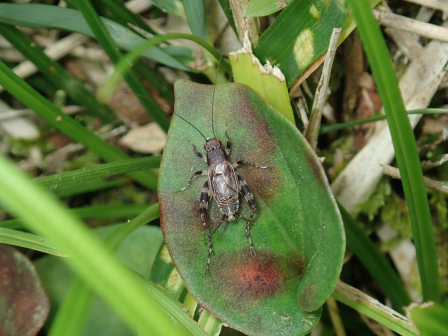
I found a cricket called "Kawara-Suzu (カワラスズ)" on the bank in the First Oak Hill. They are similar to "Madara-Suzu", but you can tell "Kawara-Suzu カワラスズ)" from "Madara-Suzu (マダラスズ)" by the fact that the base of their wings and a part called "maxillary palpus" are white. They are well known as an insect singing beautifully.
2022.09.30
アゲハモドキ
共生の森でアゲハモドキという蛾の幼虫を見つけました。白いロウ状の物質に覆われています。食草はミズキ類で、この個体はクマノミズキの木にいました。成虫はジャコウアゲハにそっくりな姿をしています。
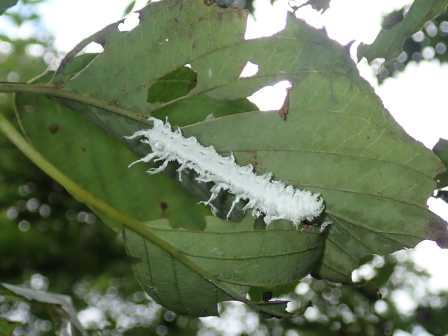
I found a larva of a moth called "Ageha-Modoki (アゲハモドキ)" in the Kyoseinomori (共生の森). They eat leaves of trees belonging to "Mizuki (ミズキ)" group and this larva was on a leaf of a "Kumano-Mizuki (クマノミズキ)" tree. Their adults look like a butterfly called "Jakou-Ageha (ジャコウアゲハ)."
2022.08.26
コジャノメ
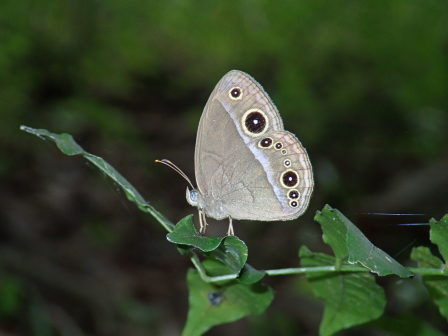
共生の森でコジャノメを見つけました。雑木林の林床で見られる蝶です。雑木林の環境が悪化し、減少している場所も多いようです。
2022.08.23
ツクツクボウシ
共生の森でツクツクボウシが鳴いています。鳴き声がそのまま名前となっています。この個体は比較的低い位置にとまっており、腹部を伸び縮みさせて鳴くようすがよく観察できました。
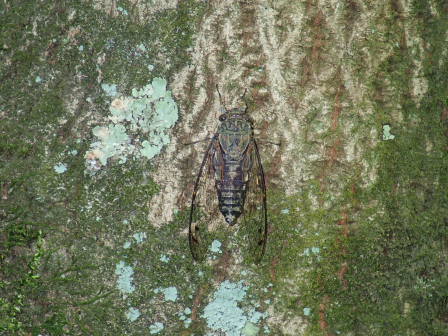
I found a cicada called "Tsuku-Tsuku-Boushi (ツクツクボウシ)" in the Kyoseinomori (共生の森). The name comes from the sound of their singing. This one in the photo was perching on a relatively low part of a tree, so I was able to see it singing expanding and contracting its abdomen.
2022.08.19
ツマジロエダシャク
共生の森でツマジロエダシャクを見つけました。写真のように、前翅と後翅を離した、特徴的な姿勢で止まります。幼虫はクスノキの葉を食べて育ちます。
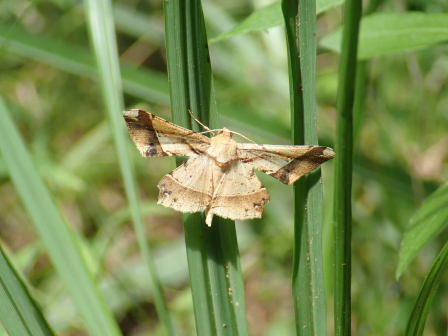
I found a "Tsumajiro-Edashaku (ツマジロエダシャク)" in the Kyoseinomori (共生の森). As you can see in the photo, they often perch in a unique posture with forewings and hindwings separated. Their larvae eat the leaves of "Kusunoki" trees.
2022.08.16
ヤマトタマムシ
校庭のサクラの木でヤマトタマムシを見つけました。タマムシの仲間はたくさんいますが、単にタマムシといった場合は本種を指します。美しい金属光沢をもっており、法隆寺の「玉虫厨子(たまむしのずし)」の装飾にはヤマトタマムシの羽が使われていることが知られています。
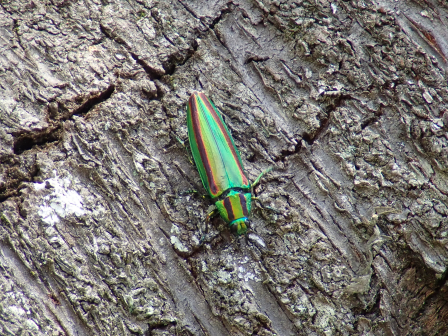
I found a "Yamato-Tamamushi (ヤマトタマムシ)" beetle on a cherry blossom tree in the school ground. There are many species in the "Tamamushi (タマムシ)" group, but it usually means this species when you say just "Tamamushi". They have a beautiful metallic luster. It's a well-known fact that their wings were used to decorate "Tamamushi-No-Zushi (たまむしのずし)" in the Horyu-Ji temple.
2022.08.12
シオカラトンボ
築山の池でシオカラトンボを見つけました。最も普通にみられるトンボの1種です。オスは成熟すると、写真のように青白い粉を全体に生じます。一方で、メスは成熟しても黄色いので、ムギワラトンボとも呼ばれています。
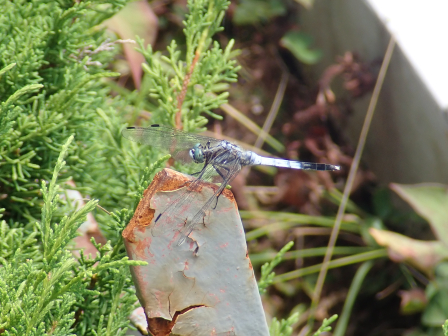
I found a "Shiokara-Tombo (シオカラトンボ)" dragonfly near the pond in the artificial hill. They are one of the most common dragonflies in Japan. After male ones mature, they produce the blue-white powder on their whole bodies as you can see in the photo. On the other hand, female ones are yellow even after they mature, so they are sometimes called "Mugiwara-Tonbo (ムギワラトンボ)".
- 1 / 12
- »