〇お知らせ〇
同じ内容をインスタグラム「不二聖心女子学院フィールド日記」(クリックするとインスタグラムのページが開きます)にも投稿しています。より高画質な写真を載せていますのでぜひフォローしてください。

フィールド日記

シダ植物

2025.01.24

クリハラン

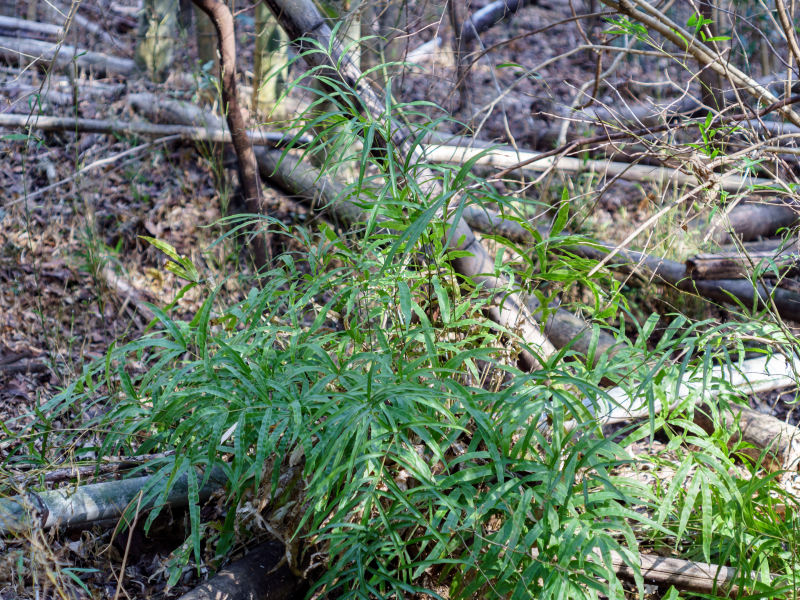
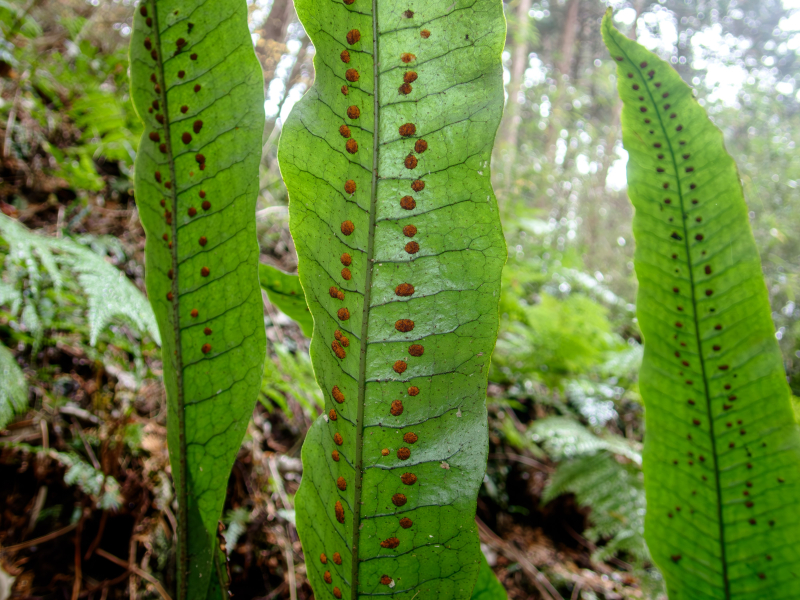
 ヒノキ林の林縁でクリハランが見られます。樹林内の湿った岩上や林床に生えるシダ植物です。葉は切れ込みがなく、シダらしくありません。和名は葉の形がクリの葉の形に似ていることに由来します。
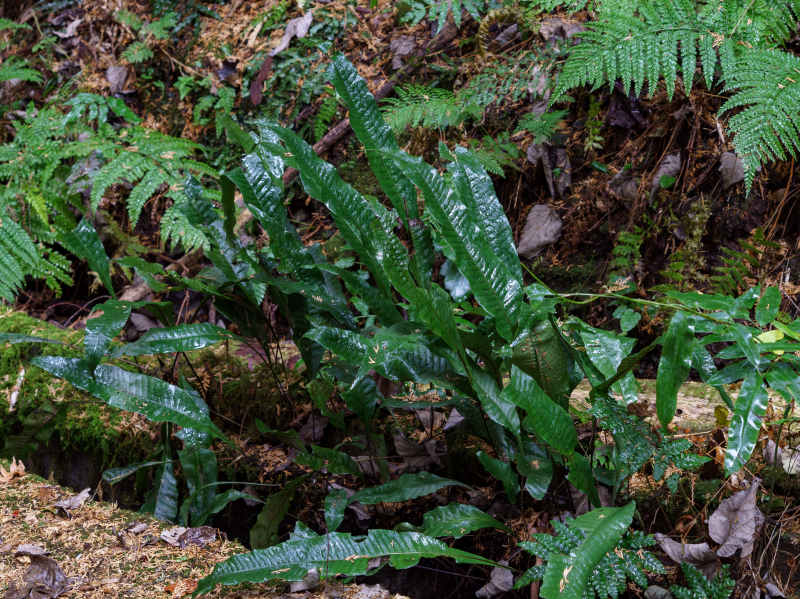

"Kuriharan (クリハラン)" fern plants are found on the edge of the Japanese cypress woodland. They are the fern plants that grow on the moist rocks in the forest or the forest floor. The leaves are unbroken so they don't look like fern plants. The name comes from the fact that their leaves look like the ones of chestnut trees.

2025.01.21

イワガネゼンマイ

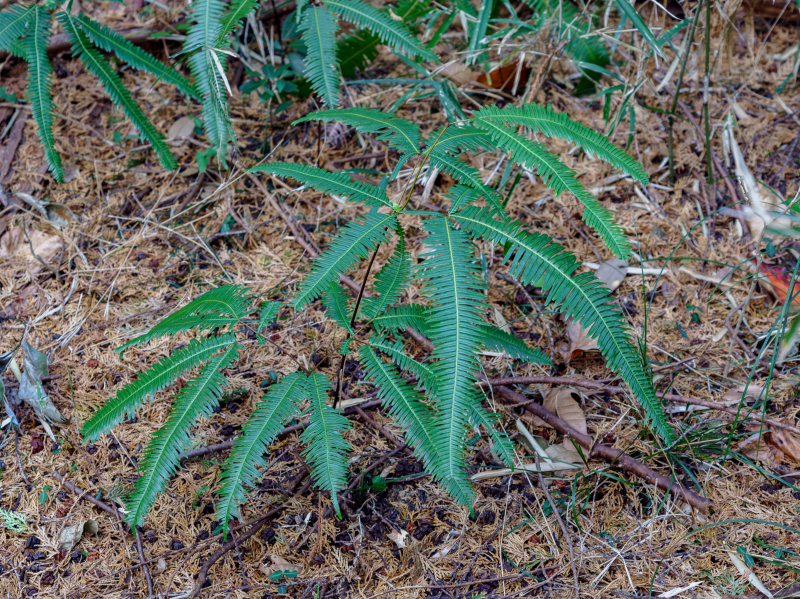
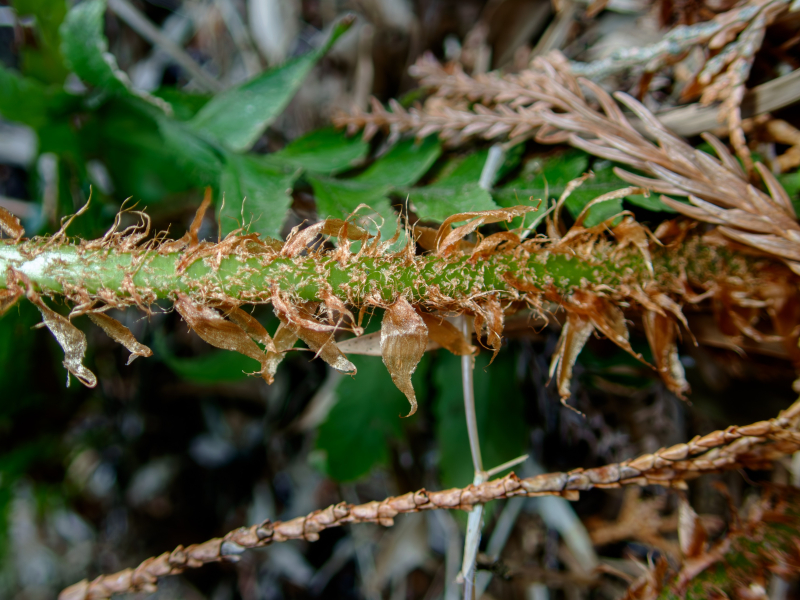
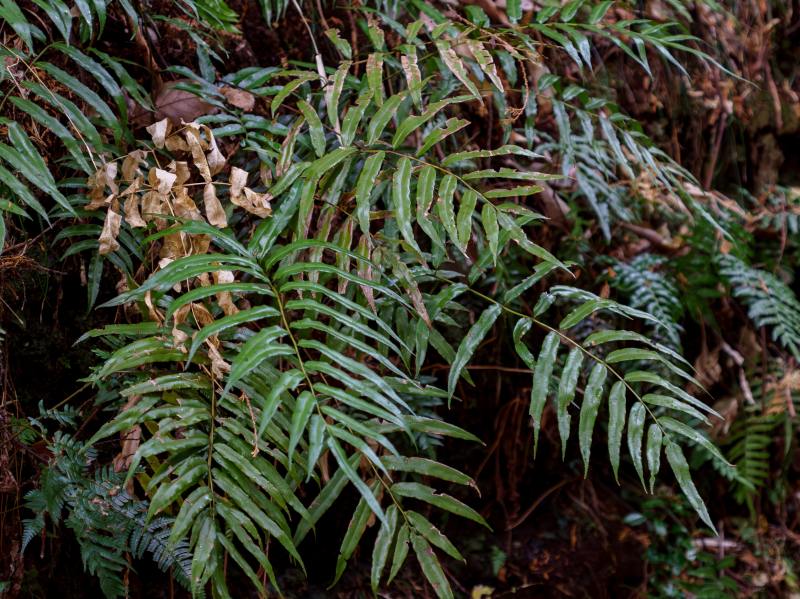
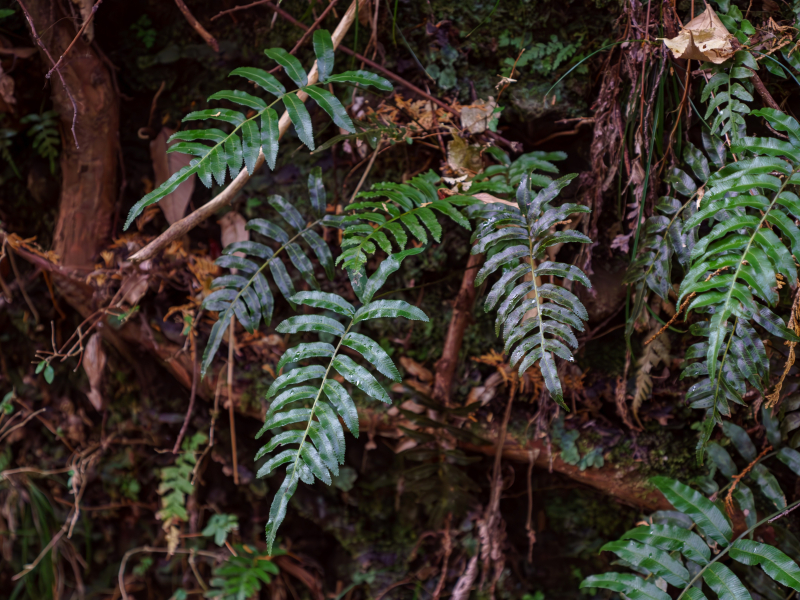
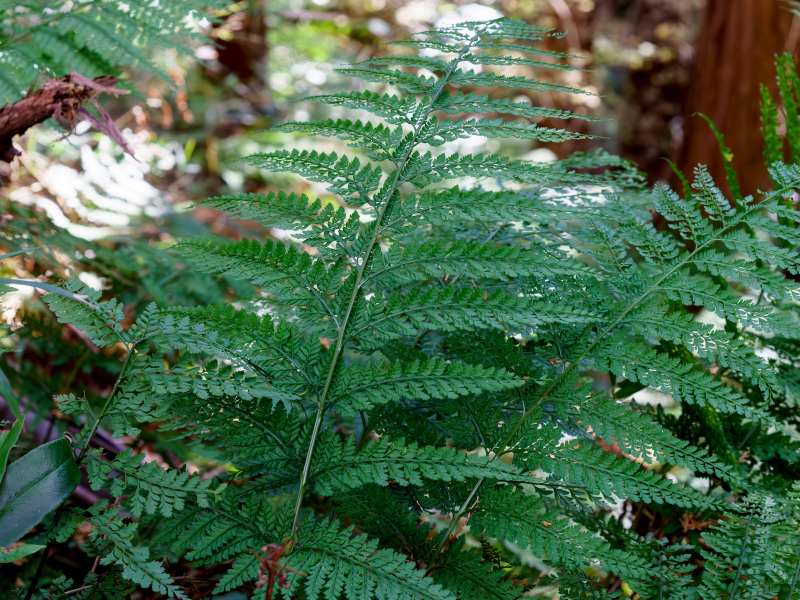
ヒノキ林の林縁でイワガネゼンマイが見られます。大型のシダ植物です。前回紹介したイワガネソウと近縁で、見た目もよく似ています。羽片の先が急にとがることや、羽片の脈が編目状にならないことが特徴です。
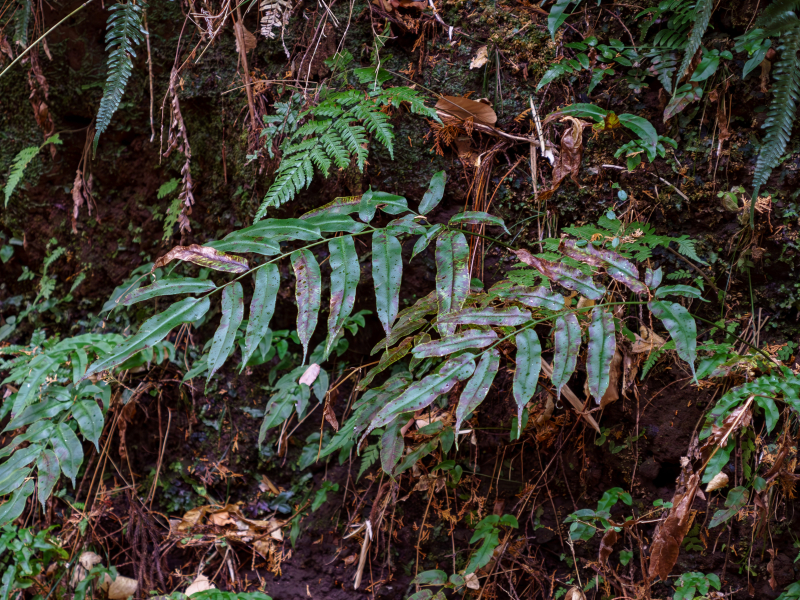
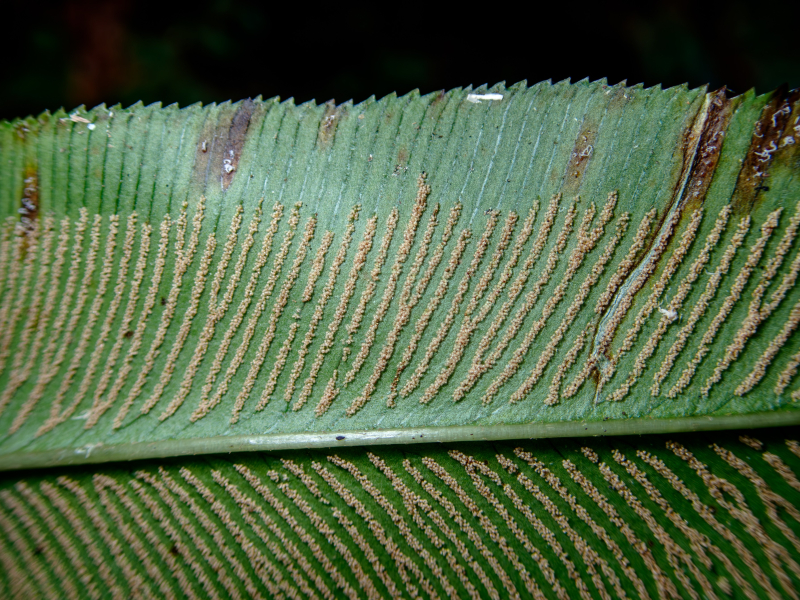


"Iwagane Zenmai (イワガネゼンマイ)" fern plants are found on the edge of the Japanese cypress woodland. They are a large fern plant. They are a relative species to the "Iwaganesou," which I posted in my last diary and they look alike.  "Iwagane Zenmai" fern plants are characterized by the abrupt pointiness of the tips of the feather fragments and also by the fact that the veins of the feather fragments do not form a braided pattern.

2025.01.17

イワガネソウ

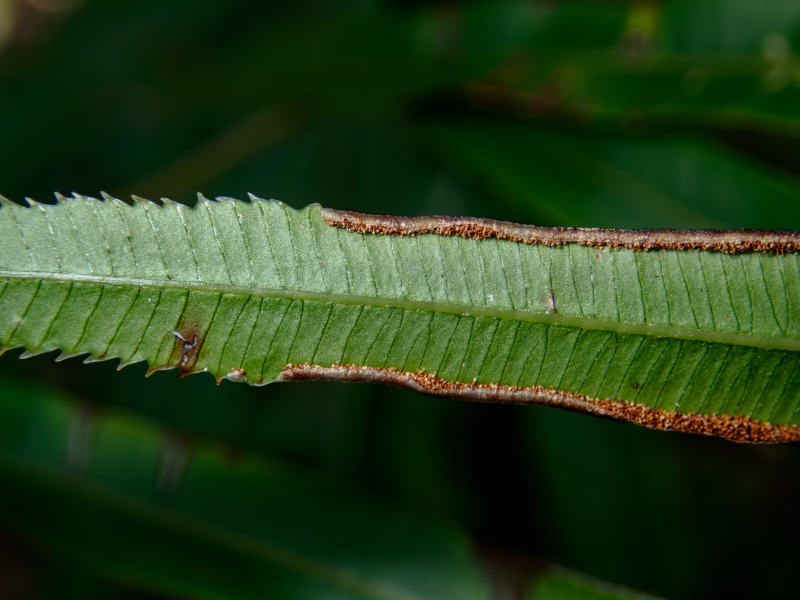
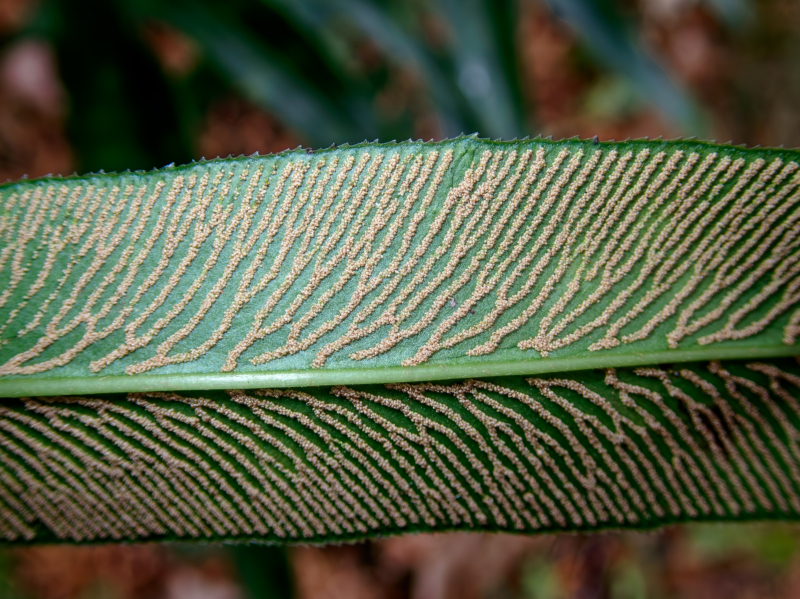
 ヒノキ林の林床でイワガネソウが見られます。大型のシダ植物で、光沢のある深緑の葉が特徴です。胞子のう群は葉脈に沿ってつきます。和名は岩が根草で、岩の根元などに生えることに由来するようです。
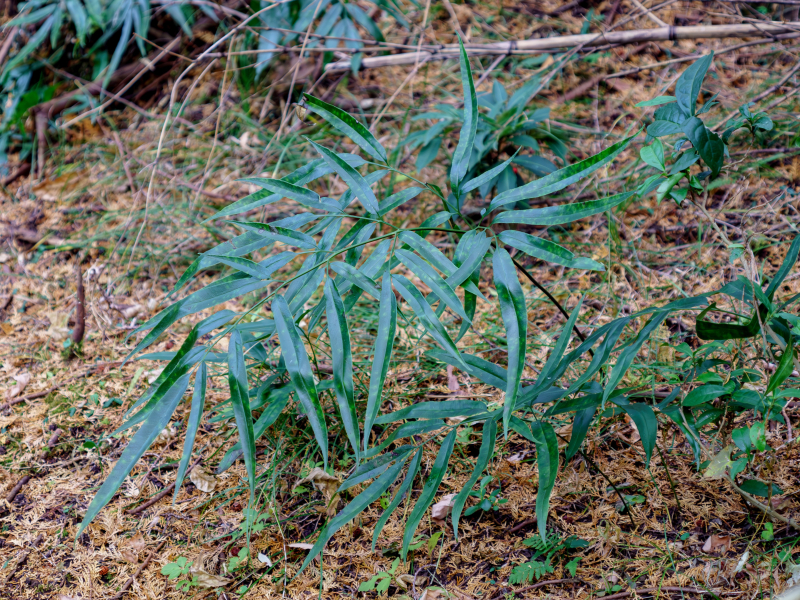


"Iwaganesou (イワガネソウ)" fern plants are found in the Japanese cypress woodland. They are the large fern plants that have shiny deep green leaves. They bear the sori along their leaf veins. The name comes from the fact that they grow around rocks.

2025.01.14

アマクサシダ

 竹林でアマクサシダが見られます。羽片の下側は幅が広いのに対し、羽片の上側は幅が狭く、鳥が羽を広げたような形に見えるのが特徴です。胞子のう群は小羽片の縁につきます。和名は熊本県の天草に由来しますが、関東地方以西の太平洋側に広く分布しています。
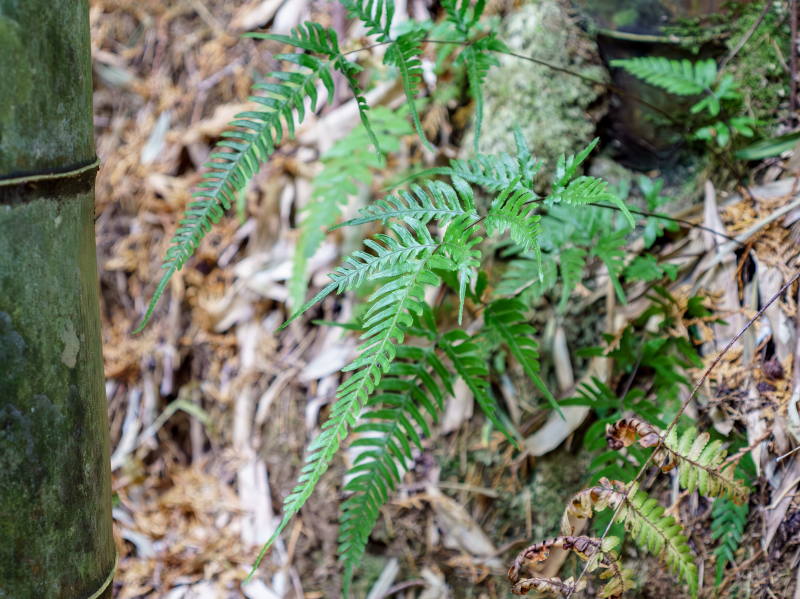
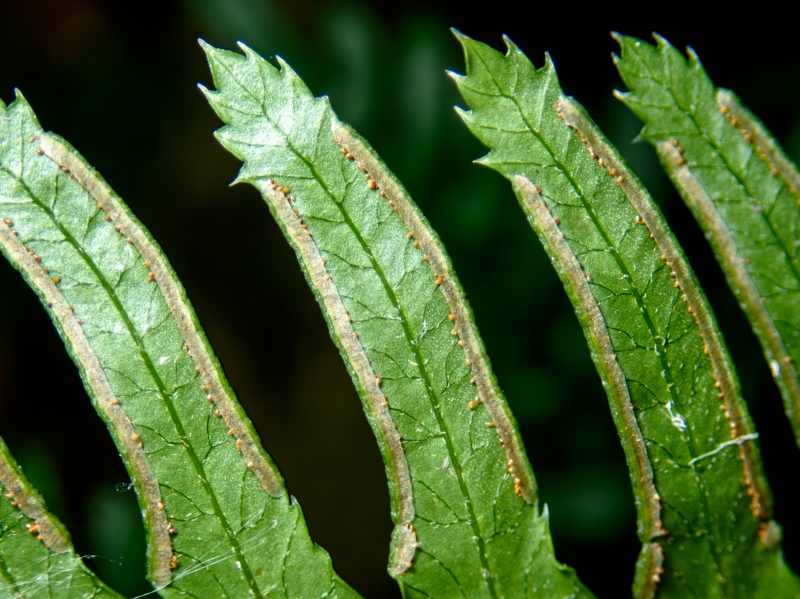

"Amakusa-Shida (アマクサシダ)" fern plants are found in the bamboo forest. While the undersides of their pinnae are wide, the upper sides of their pinnae are narrow, so they look like the wings of birds. Their sorus is on the edge of their pinnules. The name comes from the city Amakusa, Kumamoto, but they are widely distributed on the Pacific Ocean side west of the Kanto region.

2025.01.10

リョウメンシダ

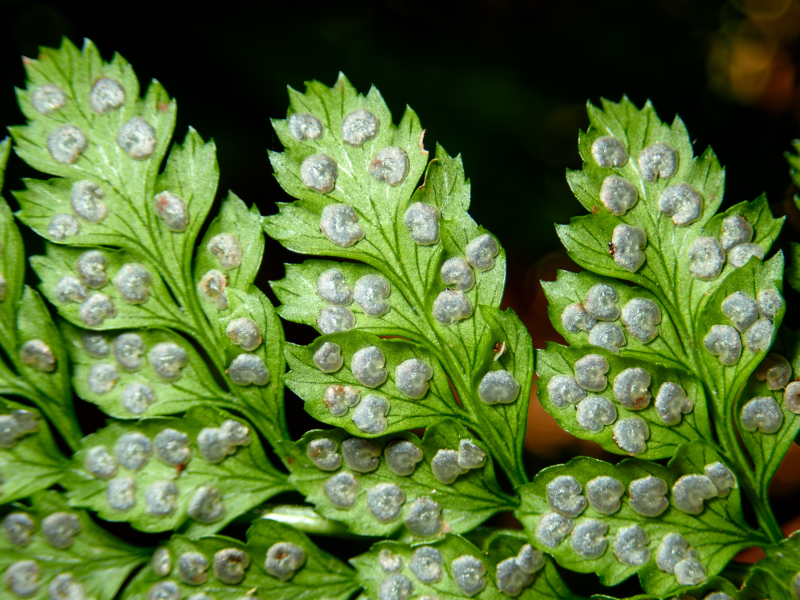
ヒノキ林でリョウメンシダが見られます。胞子のう群をつけていない葉では、葉の表と裏が同じように見えることが和名の由来です。胞子のう群は大きい円腎形の包膜におおわれています。

"Ryoumen-Shida (リョウメンシダ)" fern plants are found in the Japanese cypress woodland. The name comes from the fact that the front and the back of their leaves without sori look alike.  Their sorus is covered with the large round-kidney-shaped indusium.

2025.01.03

ナチシダ

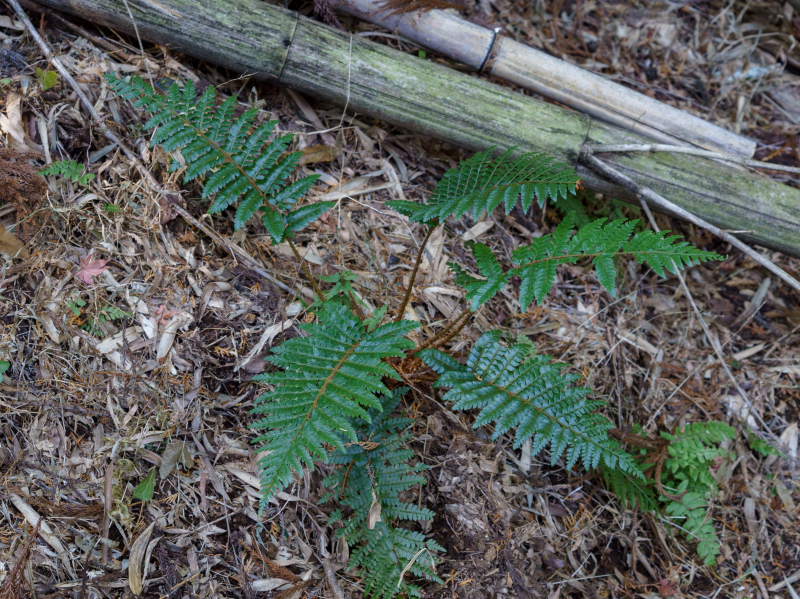
 ナチシダが見られます。常緑の大型のシダ植物で、葉は五角形に広がります。暖地性のシダで、静岡県河津町の自生地は1953年に自生北限地として国の天然記念物に指定されています。現在ではより北の自生地も知られており、キャンパス内でも徐々に個体数が増えているように思います。

"Nachisida (ナチシダ)" plants are found on campus. They are a large evergreen fern plant and spread their leaves in pentagon-shape. They prefer warm places. One of their habitats, Kawazu, Shizuoka, was designated as a national nature treasure in 1953 because it is regarded as "the northern limit of natural growth.” These days they are found further north and the number of them on campus seems to be gradually increasing.

2024.12.31

ホラシノブ

 ホラシノブが紅葉しています。明るい崖地に見られる常緑のシダ植物です。葉を密につけ、冬には葉が紅葉することが知られています。胞子のう群は葉の先端につきます。

"Horashinobu (ホラシノブ)" plants are turning to reddish colors. They are an evergreen fern plant that grows on  sunny cliffs. They densely grow their leaves, which turn to reddish colors in winter.  They bear their sporangia clusters on the tip of their leaves.

2024.01.19

トウゲシバ

 トウゲシバが胞子のうをつけています。山地の湿った樹林内に生えるシダ植物で、腎臓型の黄色い胞子のうを葉のつけ根に一つずつつけます。葉の形や大きさには変化があり、変種として区別することもあります。


"Touge-Shiba (トウゲシバ)" plants are bearing their sporangia. They are fern plants that grow in wet forests in the mountains. They bear a yellow kidney-shaped sporangium on the joined parts between its stem and leaves. The shape and size of their leaves have variations and could be classified into a few varieties.

2023.01.03

ヒメノキシノブ

 クヌギ林でヒメノキシノブが見られます。樹幹や岩上に見られるシダ植物です。近縁のノキシノブに比べて葉が短く、先端が丸いことが特徴です。葉の裏には丸い胞子のう群が見られます。キャンパス内では、ノキシノブに比べて個体数はとても少ないです。

There are "Hime-Nokishinobu (ヒメノキシノブ)" fern plants in the Japanese chestnut oak woodland. They are usually seen on trunks and rocks. You can tell "Hime-Nokishinobu" from a close relative "Nokishinobu (ノキシノブ)" fern plant by seeing Hime-Nokishinobu's shorter leaves and round tip of their leaves. There are also round-shaped sporophyte population on the back of the leaves. On our campus, they are rarer than the "Nokishinobu".

2022.10.18

フユノハナワラビ

 中学校舎の中庭にフユノハナワラビが胞子をつけていました。名前の通り秋から冬にかけて葉を広げ、胞子を飛ばすシダ植物です。シダ植物は葉の裏面に胞子をつけるものが多いですが、フユノハナワラビは、胞子嚢をつける胞子葉と、光合成をする栄養葉に分かれています。和名のハナとは、写真の中央の、黄色い胞子嚢を多数つけた胞子葉を花に見立てたものです。

I found "Fuyuno-Hana-Warabi (フユノハナワラビ)" fern plants bearing spores. As the name suggests, they are fern plants that spread spores in winter with their leaves growing. Many fern plants have spores on the back of their leaves, but this fern has the fertile leaves that produce spores and the sterile leaves that carry out photosynthesis. The word "Hana (ハナ)" in their name means "flower" and comes from their fertile leaves looking like a flower.