フィールド日記

2025年12月
2025.12.30
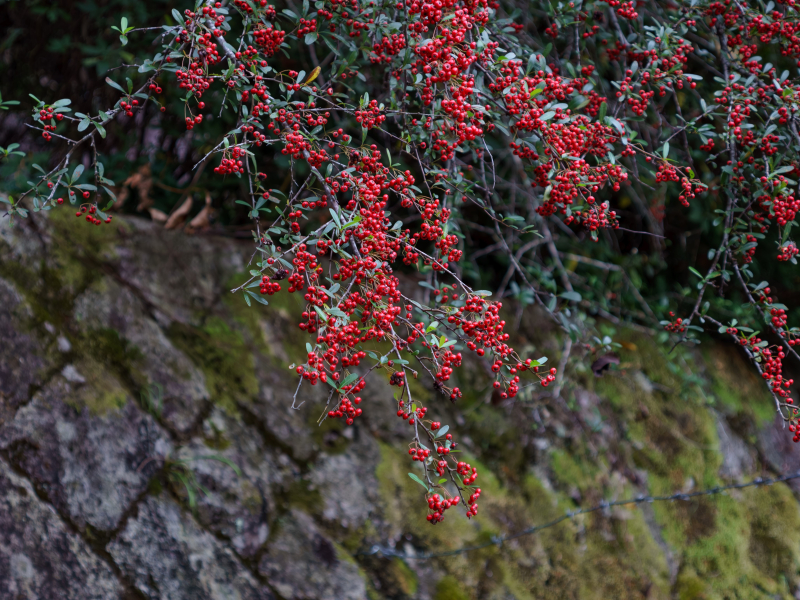
トキワサンザシ
2025.12.26
コセンダングサ
コセンダングサが咲いています。熱帯に広く分布するキク科の1年草です。果実はいわゆる「ひっつき虫」で、先端にトゲが3本ほどあり、動物や衣類にくっついて運ばれます。
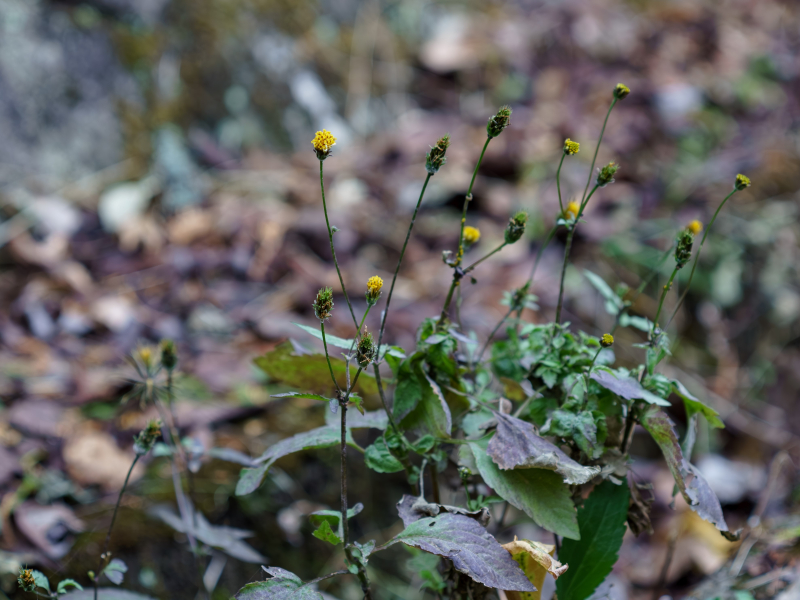
"Ko-Sendangusa" plants are in bloom. They are annual plants in the Asteraceae family that widely grow in the tropical regions. Their fruit, which is commonly known as "Hittsukimushi", are dispersed by animals and clothing, as the fruit have hooks at their tips.
2025.12.23
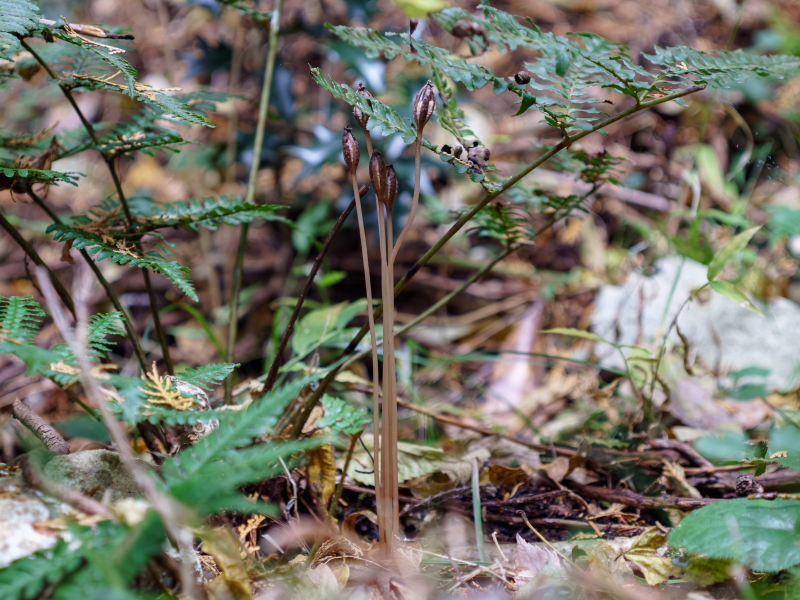
クロヤツシロラン
クロヤツシロランが種子を飛ばしていました。養分を完全に菌類から得ているラン科の多年草です。秋に咲く花は地上から数センチの高さしかなくあまり目立ちませんが、花のあと花柄が急速に伸び、ほこりのような細かい種子を放出します。
2025.12.19
ハナカンナ
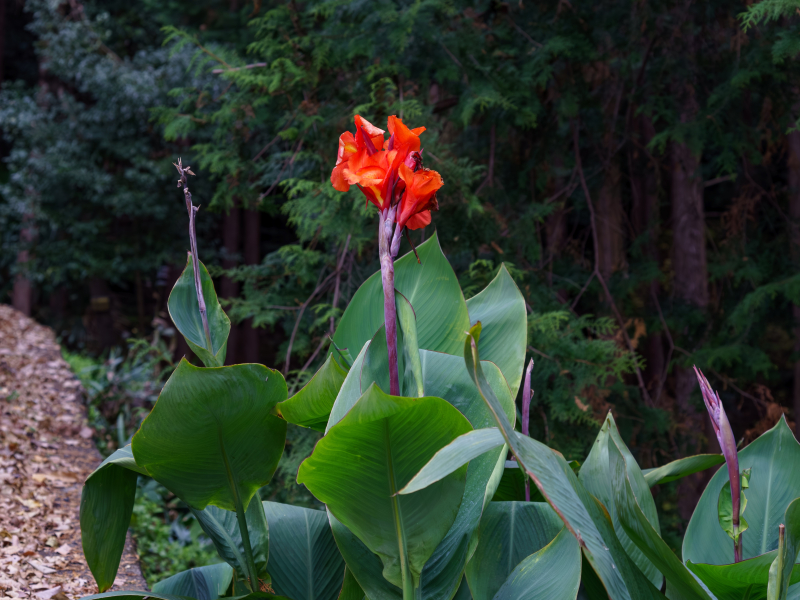
2025.12.16
シュウカイドウ
シュウカイドウが咲いています。シュウカイドウ科の多年草です。古くから栽培されており、逸出したものが人家周辺で野生化しています。花期は秋海棠(シュウカイドウ)という名前の通り秋ですが、12月に入っても開花している個体がありました。
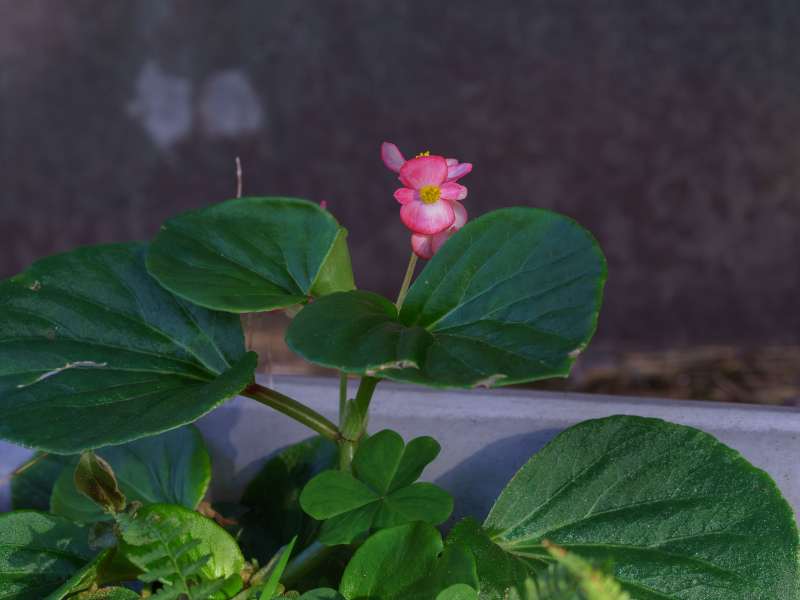
"Shuukaidou" plants are in bloom. They are perennial plants in the Begoniaceae family and have been cultivated for a long time. Some have spread into the wild and can be often found growing near houses. As their name suggests, they usually bloom in autumn, but the plant in the photo was flowering even in December.
2025.12.12
カニクサ
カニクサが胞子葉をつけています。林縁などに見られるカニクサ科のシダ植物です。和名は、つる状に伸びる硬い葉軸をカニを釣るのに利用したことに由来するようです。
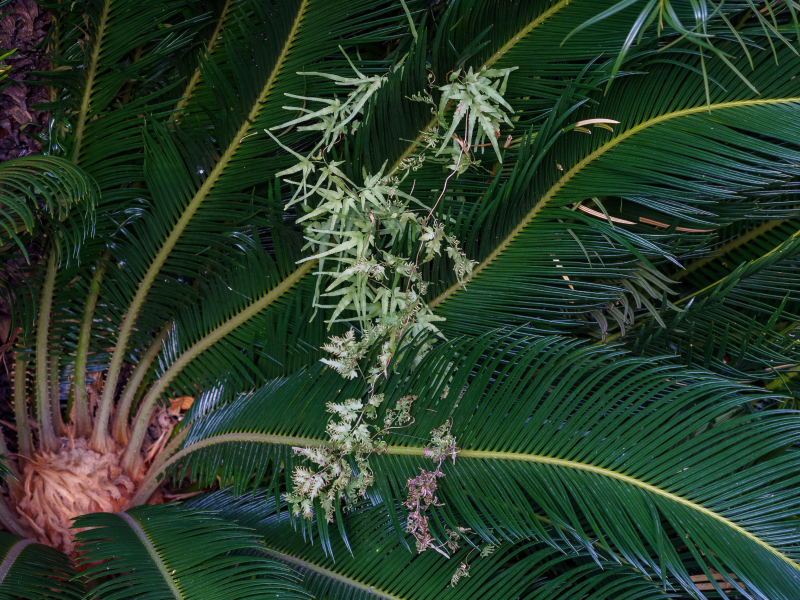
"Kanikuza" ferns are now producing fertile fronds. They are ferns in the Lygodiaceae family that typically grow along forest edges. The name comes from the fact that their tough, vine-like leaf axes are used for catching crabs.
2025.12.09
ヒメヤブラン
ヒメヤブランが実をつけています。芝地などに生えるクサスギカズラ科の多年草です。暗紫色の実は果実に見えますが、果皮は早期に失われ、種子がむき出しになって熟したものです。
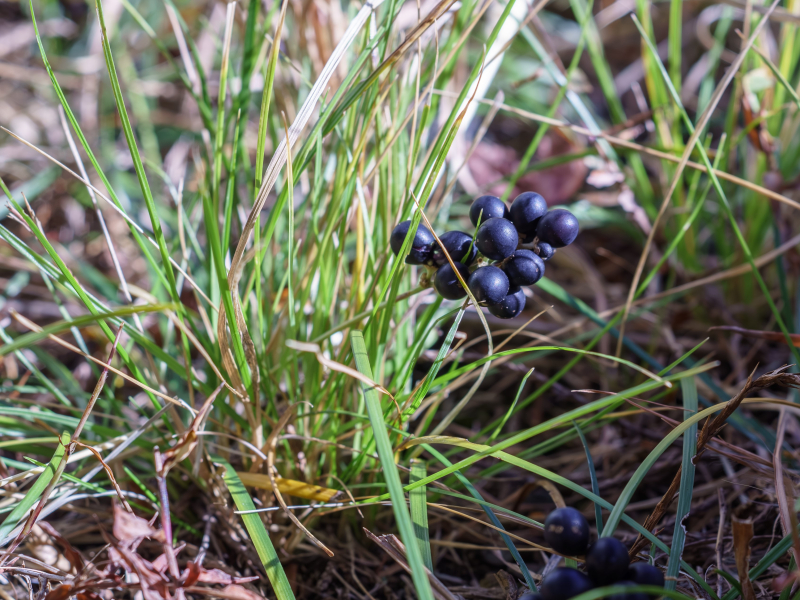
"Hime-Yaburan" plants are now bearing fruit. They are perennial plants in the Asparagaceae family that grow in grassy areas. Their black-purple ‘fruits’ are not actually fruits in botanical terms; the outer skins fall away early, and what ripens are actually seeds.
2025.12.05
ヤツデ

2025.12.02
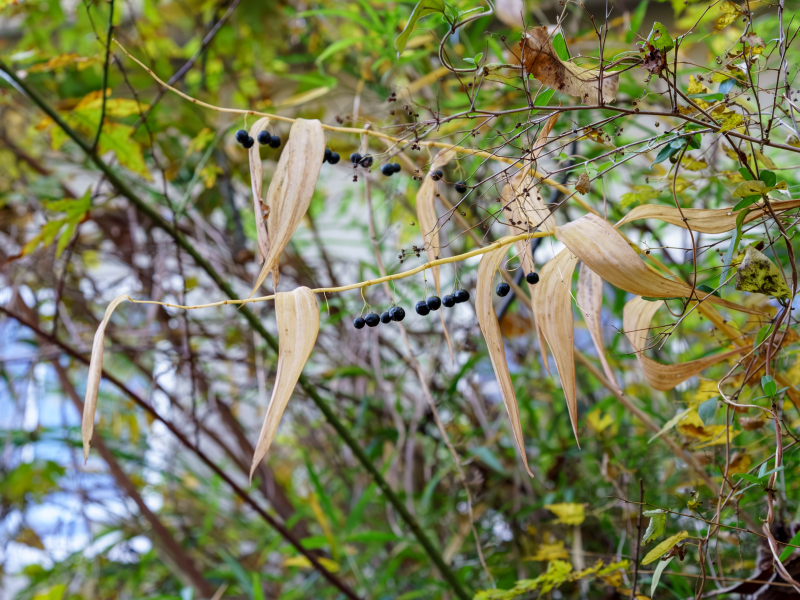
ナルコユリ
ナルコユリの実がなっています。草地や林内に見られるクサスギカズラ科の多年草です。花は5~6月ごろに葉の付け根から数個ずつ垂れ下がって咲きます。
- 1 / 1